Red, puffy or bleeding gums are your body reacting to something, and in most cases that something is plaque. Understanding the common gum inflammation causes helps you spot the early signs and act before they become a bigger problem. Here is what triggers inflamed gums, what to watch for and the daily habits that help.
What gum inflammation is
Gum inflammation, often called gingivitis, is the gums' response to bacteria in plaque sitting along the gumline. When plaque is not cleaned away, the gums react by becoming red, swollen and tender, and they may bleed when you brush or floss.
It often starts quietly. Many people notice nothing until they see pink in the sink after brushing.
The most common gum inflammation causes
- Plaque along the gumline. This is the main cause. Plaque is a sticky film of bacteria that forms on teeth every day. Left in place, it irritates the gums and can harden into tartar, which only a dental professional can remove.
- Rushed or missed brushing. Brushing for less than two minutes, skipping the night brush or missing the gumline lets plaque stay put.
- Not cleaning between teeth. Plaque between teeth is out of reach of any toothbrush, so floss or interdental brushes matter.
- Smoking. Smoking affects blood flow to the gums and can mask bleeding, so problems may go unnoticed for longer.
- Hormonal changes. Pregnancy, puberty and other hormonal shifts can make gums more reactive to plaque.
- Health conditions. Diabetes, for example, is linked with a higher risk of gum problems.
- Some medicines. Certain medicines can cause a dry mouth or affect the gums. If you notice changes after starting one, mention it to your doctor or dentist.
- Diet. Frequent sugary food and drink feeds plaque bacteria, and a diet low in vitamin C is linked with poorer gum health.
- Busy, stressful stretches. These are often when brushing gets rushed and check-ups get postponed.
Signs to watch for
- Gums that bleed when you brush or floss
- Red, swollen or tender gums
- Persistent bad breath or a bad taste
- Gums that seem to be pulling away from the teeth
- Teeth that feel loose, or a change in your bite
Bleeding gums are common, but they are not normal. Left alone, gum inflammation can progress to periodontitis, a more serious condition that affects the tissue and bone supporting the teeth. If you notice any of these signs, especially the last two, see your dentist.
How to look after your gums day to day
The aim is to remove plaque from the gumline gently and consistently. A simple routine:
- Brush twice a day for two minutes with a fluoride toothpaste.
- Angle the bristles towards the gumline at about 45 degrees.
- Be gentle. Do not scrub harder because your gums bleed. Gentle, thorough cleaning is the goal.
- Clean between your teeth once a day with floss or interdental brushes.
- Replace your brush head about every three months.
- See your dentist or hygienist regularly for check-ups and to remove tartar.
Where a sonic toothbrush helps
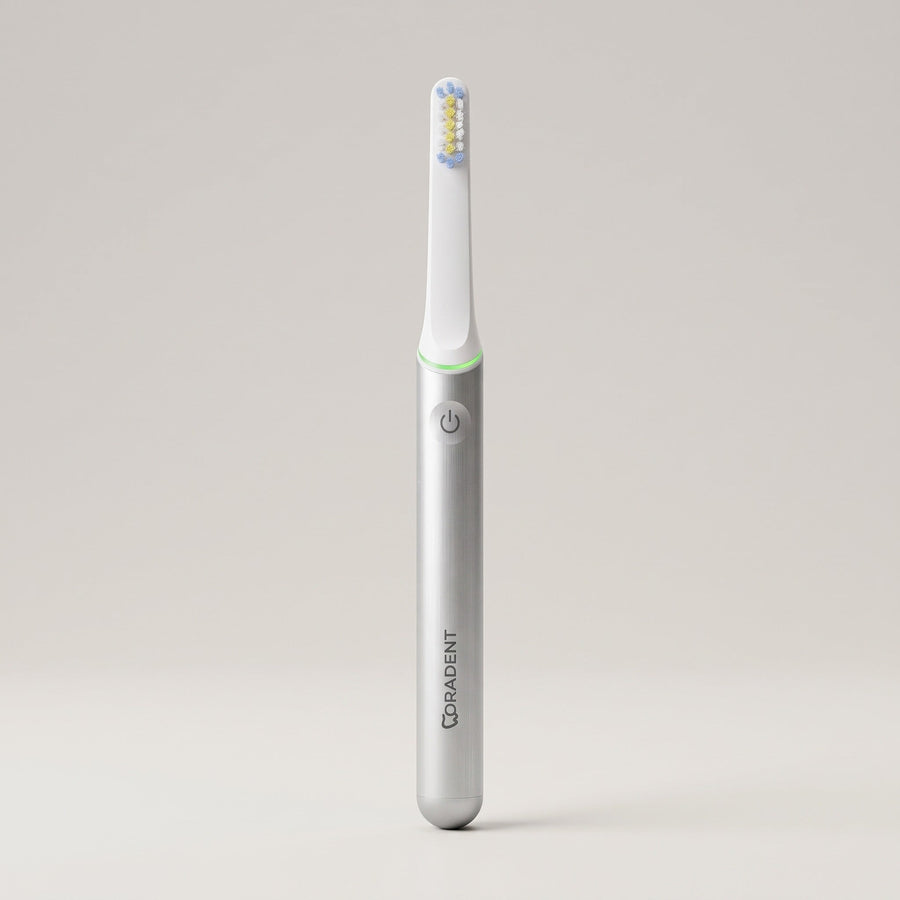
A sonic toothbrush does not treat gum inflammation, but it can make the daily habit easier to get right. The head moves rapidly, so you guide it slowly along the gumline instead of scrubbing. That helps remove plaque where tooth meets gum while keeping pressure light, which matters when gums are tender.
A built-in timer also helps you reach the full two minutes and cover every area evenly. For more, read our articles on choosing an electric toothbrush for gum health and how sonic brushing works along the gumline.
Questions
What is the most common cause of gum inflammation?
Plaque left along the gumline is the most common cause. It builds up every day, so brushing twice a day and cleaning between your teeth are the main defences.
Should I stop brushing if my gums bleed?
No. Avoiding the area lets plaque build up further. Keep brushing gently and cleaning between your teeth, and see your dentist if the bleeding continues.
Can a sonic toothbrush help with gum inflammation?
A sonic toothbrush helps remove plaque along the gumline with a gentle touch, which supports healthy gums. It is not a treatment, so if your gums stay red, swollen or keep bleeding, your dentist should take a look.
When should I see a dentist about my gums?
If your gums bleed regularly, stay swollen or seem to be receding, or your teeth feel loose, book an appointment. Regular check-ups also catch problems before you notice them.
Gentle gumline cleaning with PulseONE
PulseONE pairs SonicSweep technology, 38,000 movements a minute with the head sweeping 45 degrees side to side, with a Sensitive mode and a Gentle Touch head for tender days. SmartSense Brushing technology buzzes every 30 seconds so each quarter of your mouth gets its share. Keep heads fresh with the Head Plan.