A good daily oral care routine is not complicated. It is brushing twice a day with fluoride toothpaste, cleaning between your teeth, and a few small habits that protect your enamel and gums. The hard part is doing it every day, including the rushed mornings and tired nights.
Here is a routine that takes about five minutes a day, plus the tools that make it easier to keep.
Your morning routine
- Brush for two minutes with a pea sized amount of fluoride toothpaste. Work through your mouth in four quarters, about 30 seconds each.
- Angle the bristles towards the gumline at roughly 45 degrees and move slowly. The gumline is where plaque collects most.
- Spit, do not rinse. Leaving a thin layer of fluoride toothpaste on your teeth gives it more time to work.
- Rinse and dry your brush and store it upright so the bristles can air dry.
If you like to brush after breakfast and have had something acidic such as citrus, juice or coffee, waiting a while before brushing is gentler on enamel. Many people simply brush before breakfast instead.
Your night routine
- Clean between your teeth with floss or interdental brushes. Night is the easiest time to make this a habit.
- Brush for two minutes, the same way as the morning. This is the most important brush of the day, because saliva flow drops while you sleep.
- Spit, do not rinse, and avoid eating or drinking anything other than water afterwards.
- Use mouthwash only if your dentist suggests it, and at a different time from brushing so it does not wash away the fluoride.
Habits that quietly undo good brushing
- Scrubbing hard. Pressing firmly does not clean better. It can wear enamel and irritate gums. A light touch is enough.
- Rushing. Thirty seconds of brushing misses most of the back teeth and inner surfaces.
- Old bristles. Splayed bristles clean poorly. Replace your brush or head about every three months. Our guide to replacing your toothbrush head shows what to look for.
- Frequent snacking and sugary drinks. Each one gives plaque bacteria more to work with. Water between meals helps.
- Skipping check ups. Your dentist can spot problems early and remove hardened tartar that brushing cannot.
Where a sonic toothbrush fits in
A sonic toothbrush does not change what a good routine is. It makes the routine easier to do well.
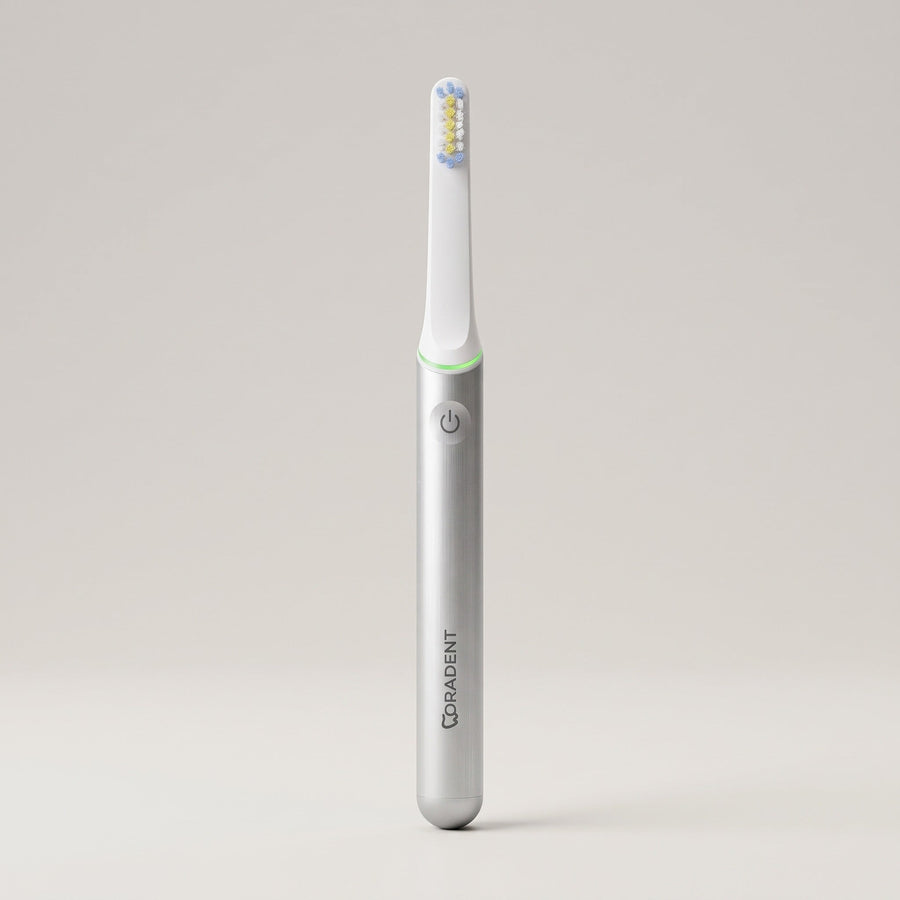
- The motion is done for you. PulseONE uses SonicSweep technology: 38,000 movements a minute, with the head sweeping 45 degrees side to side. You hold it lightly and guide it along each tooth.
- Timing is built in. SmartSense Brushing technology runs a two minute timer with a short buzz every 30 seconds, so you know when to move to the next quarter.
- Comfort is adjustable. Three modes, Sensitive, Deep Clean and Polishing, let you choose how it feels. The Gentle Touch head in the box suits sensitive teeth.
If you are new to sonic brushing, our guide to brushing with a sonic toothbrush covers technique step by step.
Making the routine stick
Consistency comes from removing small points of friction:
- Keep the brush in sight. A brush mounted at eye level gets used. PulseONE comes with the Oradent WallMount for that reason.
- Put floss where you will see it, next to the brush rather than in a drawer.
- Make travel easy. A slim travel case and a battery that lasts 45 days on one charge, approximately six weeks, from any USB-C cable means trips do not break the habit.
- Tie it to something you already do, such as brushing straight after you switch off the kettle in the morning or before you set your alarm at night.
Questions
How long should a daily oral care routine take?
About five minutes across the day: two minutes of brushing morning and night, plus a minute or so cleaning between your teeth. It is short enough to keep up even on busy days.
Should I brush before or after breakfast?
Either works. If you brush after, give your enamel some time to recover from acidic food and drinks first. Brushing before breakfast avoids the wait altogether.
Do I need mouthwash every day?
Not necessarily. Brushing with fluoride toothpaste and cleaning between your teeth are the essentials. Your dentist can tell you if a mouthwash would help in your case.
Is flossing really necessary if I use an electric toothbrush?
Yes. No toothbrush cleans fully between teeth where they touch. Floss or interdental brushes reach those surfaces.
Make it easier with PulseONE
PulseONE is $228 and is built for an everyday routine: SmartSense pacing, three modes, a 71 g brushed aluminium body and six weeks between charges. See what is in the box, including two heads, the travel case and the WallMount. Designed in Australia, with our 7 day smile guarantee.