Walk down any toothbrush aisle and prices run from a few dollars to several hundred. So are expensive electric toothbrushes worth it, or does a simple brush do the same job? The honest answer depends on your habits, and this guide sets out what extra money buys, what it does not, and how to work out the real cost.
What every toothbrush has to do
Any toothbrush, cheap or expensive, has one job: remove plaque from every surface of every tooth, especially along the gumline, twice a day. A manual brush used with good technique for two full minutes does that job. Price does not replace technique.
Where a better brush earns its place is in making good technique easier to repeat every day, including the mornings and nights when you are tired or rushed.
What a budget brush does well
- Low upfront cost. A manual brush or basic battery brush costs very little.
- Simplicity. Nothing to charge and nothing to learn.
- Effective with good habits. If you already brush gently at the gumline for two minutes, it works.
The catch is that it relies entirely on you. There is nothing to time you, pace you or discourage you from scrubbing too hard.
What extra money actually buys
A well made sonic toothbrush adds things that support better brushing rather than replace it:
- Movement done for you. The head moves rapidly, so you guide rather than scrub, which encourages a lighter touch.
- Built-in timing and pacing. A two minute timer with cues to move around your mouth means fewer missed areas.
- Modes for different days. A gentle setting for sensitive teeth and a fuller clean for everyday use.
- Battery and build quality. A better battery means weeks between charges, and better materials mean a body made to last.
- Water resistance and travel design. Easier to rinse, store and pack.
- Warranty and support. A proper warranty matters for something you use twice a day.
What extra money does not buy
It is worth being clear about the limits. No toothbrush at any price replaces cleaning between your teeth, fluoride toothpaste, a sensible diet or regular check-ups with your dentist.
Beyond a certain point, extra features add cost without changing how clean your teeth get. Before paying more, ask whether each feature helps you brush better or simply adds complexity.
The real cost over a year
The upfront price is only part of the picture. Heads need replacing about every three months, so it pays to do the maths. Using PulseONE as an example:
- The brush: $228, with two heads in the box.
- Replacement heads: $29 for a 2-pack.
- Ongoing cost for one person: replacing a head every three months uses two 2-packs a year, about $58.
If you use the brush for several years, its price becomes a modest yearly cost, and the heads are the part to budget for. Whatever brush you consider, check the head price before you buy, because that is what you will keep paying. Our compare page shows how the Oradent options line up, and our guide to when to replace your brush head helps you get the timing right.
So, which is right for you?
- A budget brush suits you if you already brush gently for the full two minutes, twice a day, and want the lowest cost.
- A premium electric toothbrush suits you if you tend to rush, press too hard, have sensitive teeth, or want weeks of battery and simple travel.
For a closer look at the two approaches, read our comparison of manual and electric toothbrushes.
Questions
Is a cheap electric toothbrush better than a manual one?
It can be, if the timer and movement help you brush for longer and more gently. A manual brush used well is still effective, though. The brush that works is the one you use properly twice a day.
How much should I spend on an electric toothbrush?
Spend enough to get the features that help you: a reliable timer, a gentle mode, good battery life and a proper warranty. Then check the ongoing head cost, since that adds up over the years.
Do expensive toothbrushes clean better?
Price alone does not decide how clean your teeth get. Technique and consistency matter most. What a well designed brush does is make good technique easier to repeat every day.
How do I know if a premium brush is right for me?
Try it in your real routine. A satisfaction guarantee lets you use it daily and decide on how it feels, rather than on the box.
Where PulseONE sits
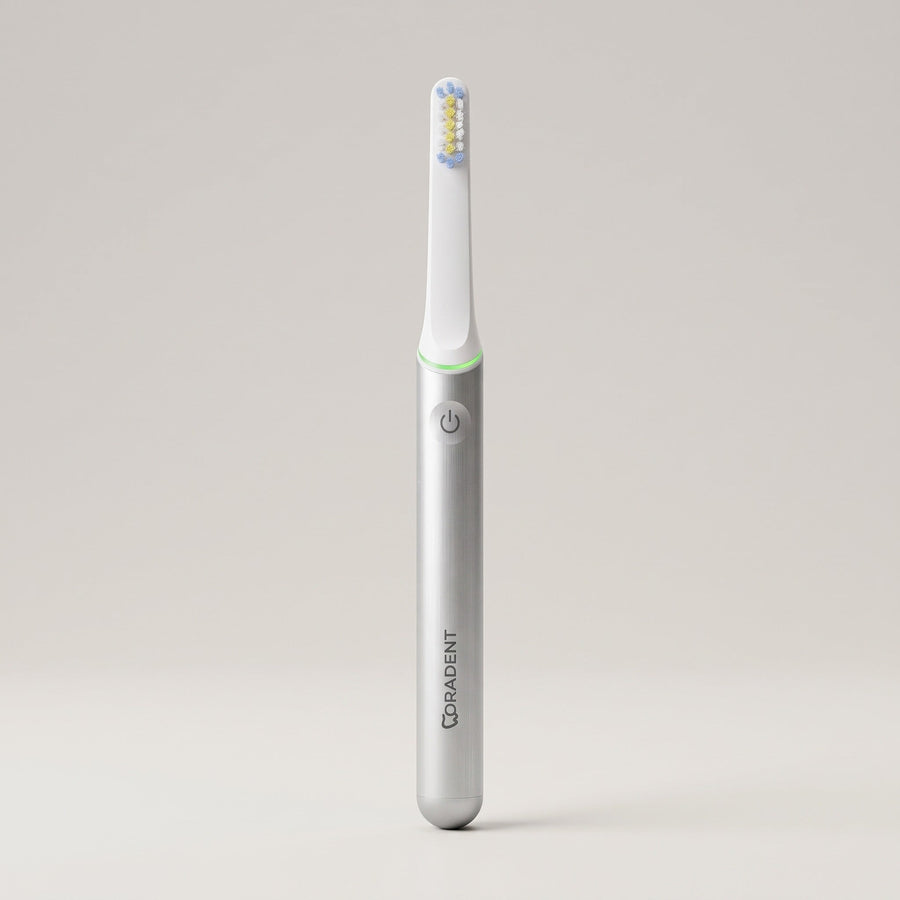
PulseONE is $228 and focuses on the features that change how you brush: SonicSweep technology at 38,000 movements a minute, SmartSense Brushing pacing every 30 seconds, three modes, a 71 g aluminium body, and 45 days on one charge, approximately six weeks, from any USB-C cable. It comes with a 12 month warranty and our 7 day smile guarantee: use it every day for 7 days, and if you are not happy, we give you a full refund and pay the return.