Knowing how to choose an electric toothbrush is easier when you start with how you brush, not with a list of features. The right brush is the one you will use properly twice a day for years, so comfort, simplicity and running costs matter as much as cleaning power.
This guide walks through the decisions in order, from the type of cleaning action to the cost of replacement heads.
Start with your mouth and your habits
Before comparing brushes, answer a few honest questions about yourself. Your answers will narrow the field quickly.
- Are your teeth or gums sensitive? If so, a soft head and a gentle mode matter more than raw power.
- Do you tend to rush? A timer that paces you through the mouth is the feature you will notice most.
- Do you travel often? Battery life, charging style and a protective case become important.
- Do you forget to charge things? A long battery means fewer flat brush mornings.
- Is the brush for one person or two? A two brush set can simplify a shared bathroom.
Choose the cleaning action
Most electric toothbrushes use one of two actions. Sonic brushes move a slim head side to side at very high speed. Rotating brushes use a small round head that turns back and forth. Both are electric toothbrushes, and both can clean well when used with good technique.
Many people find a sonic brush feels smoother, and the slim head is familiar if you are coming from a manual brush. If you are new to the idea, our guide to what a sonic toothbrush is explains how it works in plain English.
The features that genuinely matter
Once you know the action you prefer, these are the features worth checking on every brush you compare.
- A two minute timer with pacing. A short prompt every 30 seconds helps you give each quarter of your mouth equal time.
- A gentle mode. Two or three well chosen modes, including a sensitive setting, cover most needs.
- Head choice. Look for an everyday head and a softer head for sensitive teeth, with easy reordering.
- Battery and charging. Check the stated battery life and whether you need a dedicated base or can use a standard cable.
- Water resistance. A sealed, water resistant body is easier to rinse and keep clean.
- Weight and grip. A light, well balanced body is more comfortable to guide slowly around your mouth.
Extras that are optional
Some electric toothbrushes add app tracking, pressure alerts or long lists of modes. These suit some people, but they also add cost and complexity. Ask yourself whether you will still be opening an app in six months, and whether you will really use eight modes or settle on one or two.
A simple brush that you use well every day will serve you better than a feature packed brush you use half heartedly. If you want to see brushes side by side, the Oradent compare page lays out the differences clearly.
Work out the real cost
The purchase price is only part of the picture. Brush heads should be replaced about every three months, so add a year of heads to every brush you compare.
As an example, PulseONE is $228, and PulseONE Heads come in a 2-pack for $29. One person replacing a head every three months uses two packs a year, so heads cost about $58 a year. A Head Plan can send fresh heads on a schedule so you never have to remember.
Also check the warranty, whether heads are easy to buy in Australia, and whether there is a trial period that lets you return the brush if it does not suit you.
Questions
Do I need an app on my electric toothbrush?
No. A two minute timer with 30 second prompts covers the most useful job an app does, which is keeping you brushing for long enough and evenly. Apps suit people who enjoy tracking data, but they are not essential for a good clean.
How many modes does an electric toothbrush need?
Most people are well served by three: a sensitive mode, an everyday or deep clean mode, and a polishing mode. More modes can be confusing, and most owners end up using one or two.
What should two people in the same home buy?
Each person should have their own brush and heads. A two brush set is usually simpler and better value than buying separately, and colour coded heads make it easy to tell them apart.
How long should an electric toothbrush last?
A well made electric toothbrush should last for years with normal care. Look for a solid warranty, and replace the heads, not the brush, every three months.
Where PulseONE fits
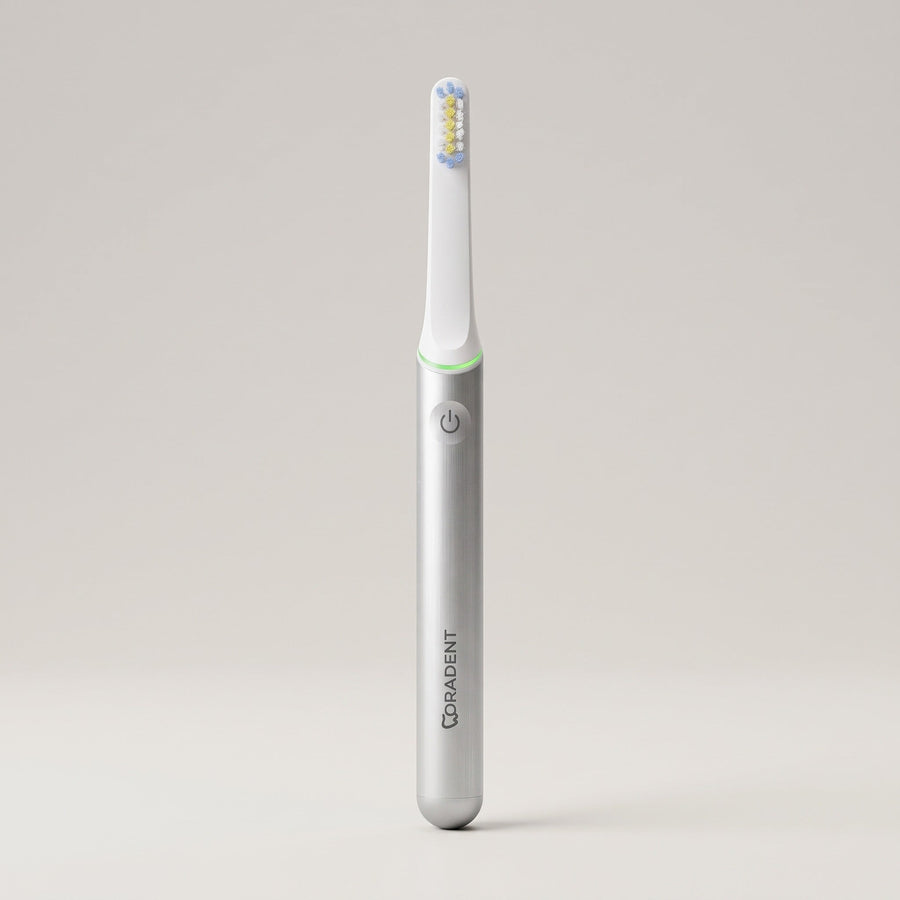
PulseONE was designed around the features that genuinely matter. It has SonicSweep technology at 38,000 movements a minute, SmartSense Brushing technology with a buzz every 30 seconds, three modes (Sensitive, Deep Clean and Polishing), IPX7 water resistance and a 71 g brushed aluminium body. The battery gives you 45 days on one charge, approximately six weeks, from any USB-C cable.
See the PulseONE sonic toothbrush, or choose PulseONE Duo at $426 if you are buying for two. Both come with a 12 month warranty and our 7 day smile guarantee.