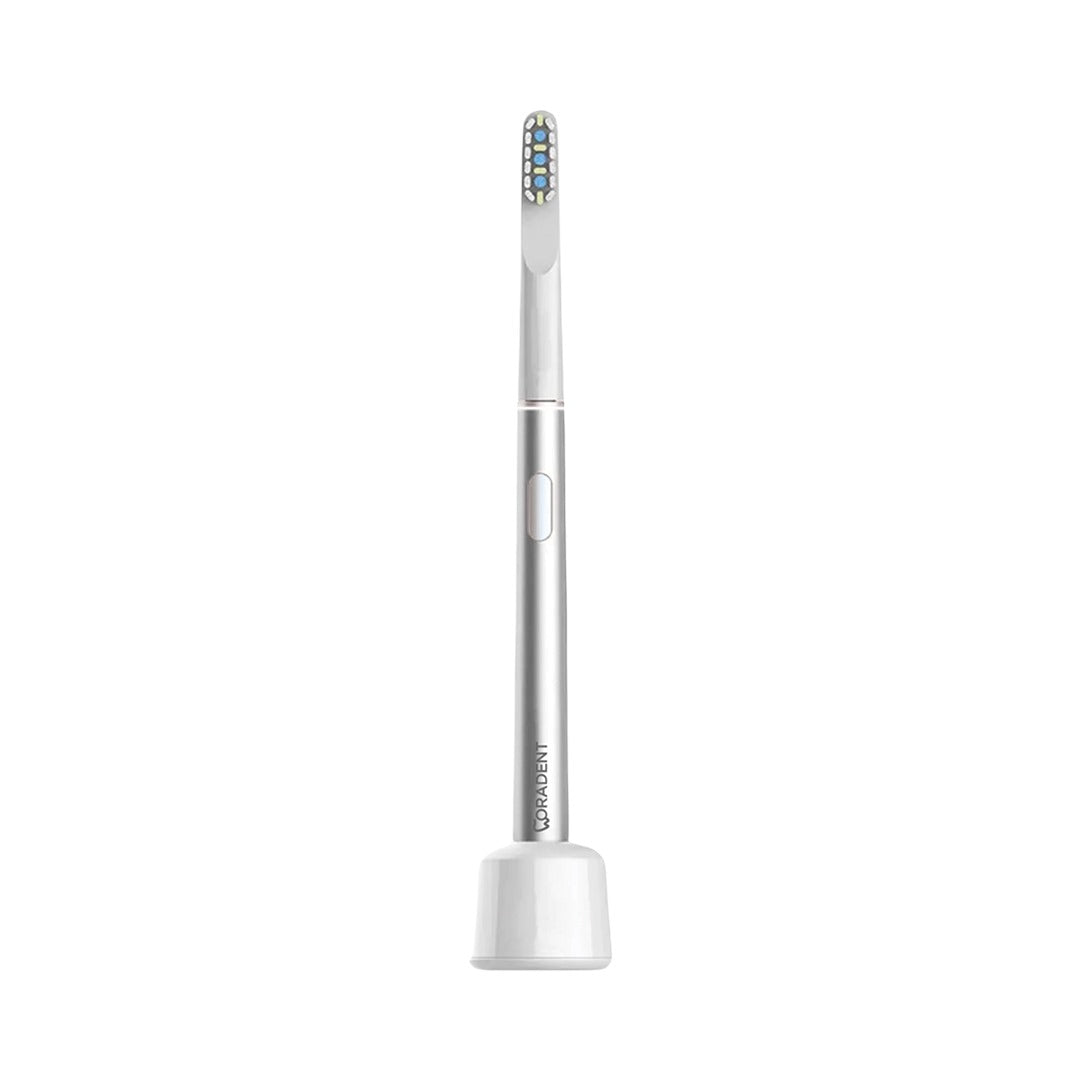
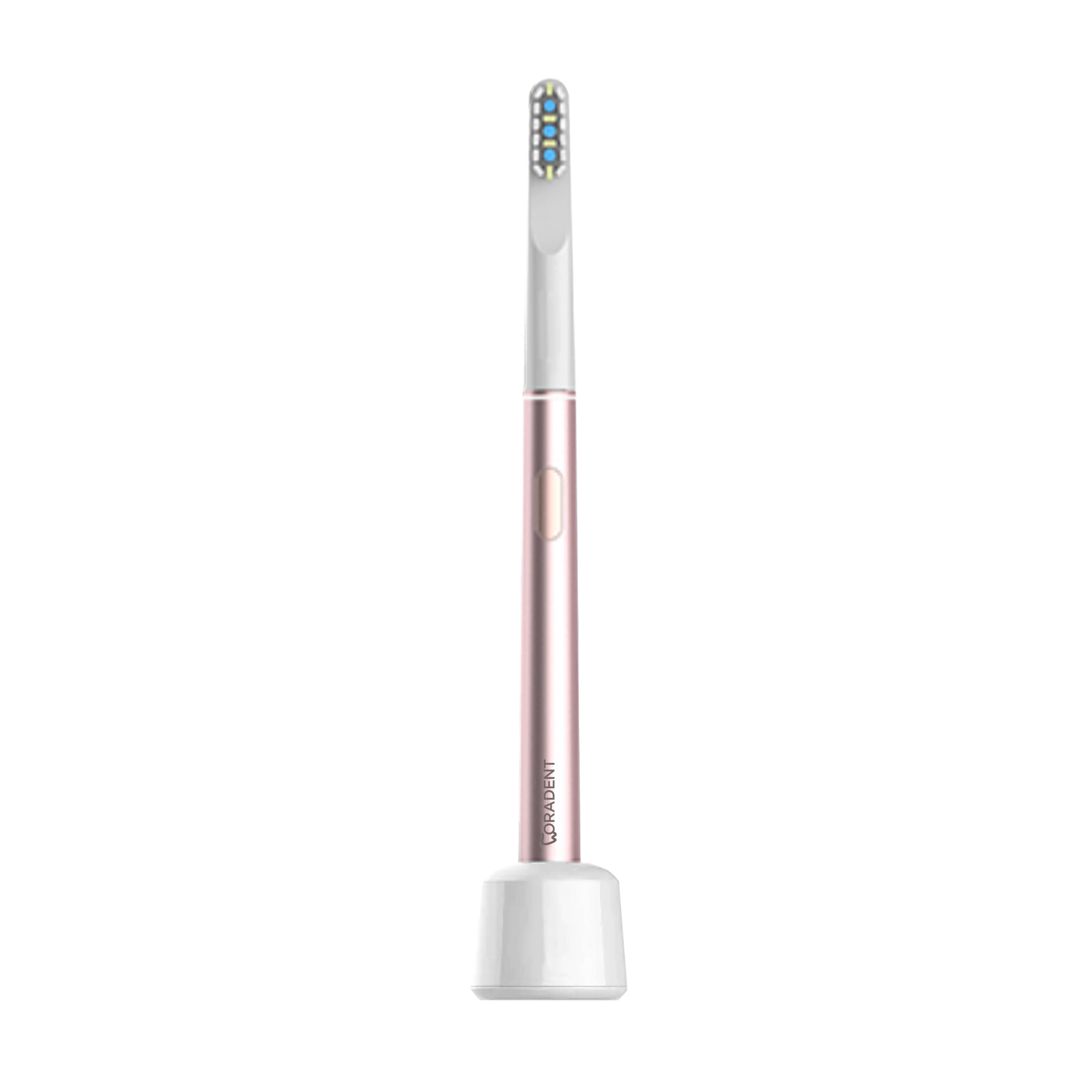
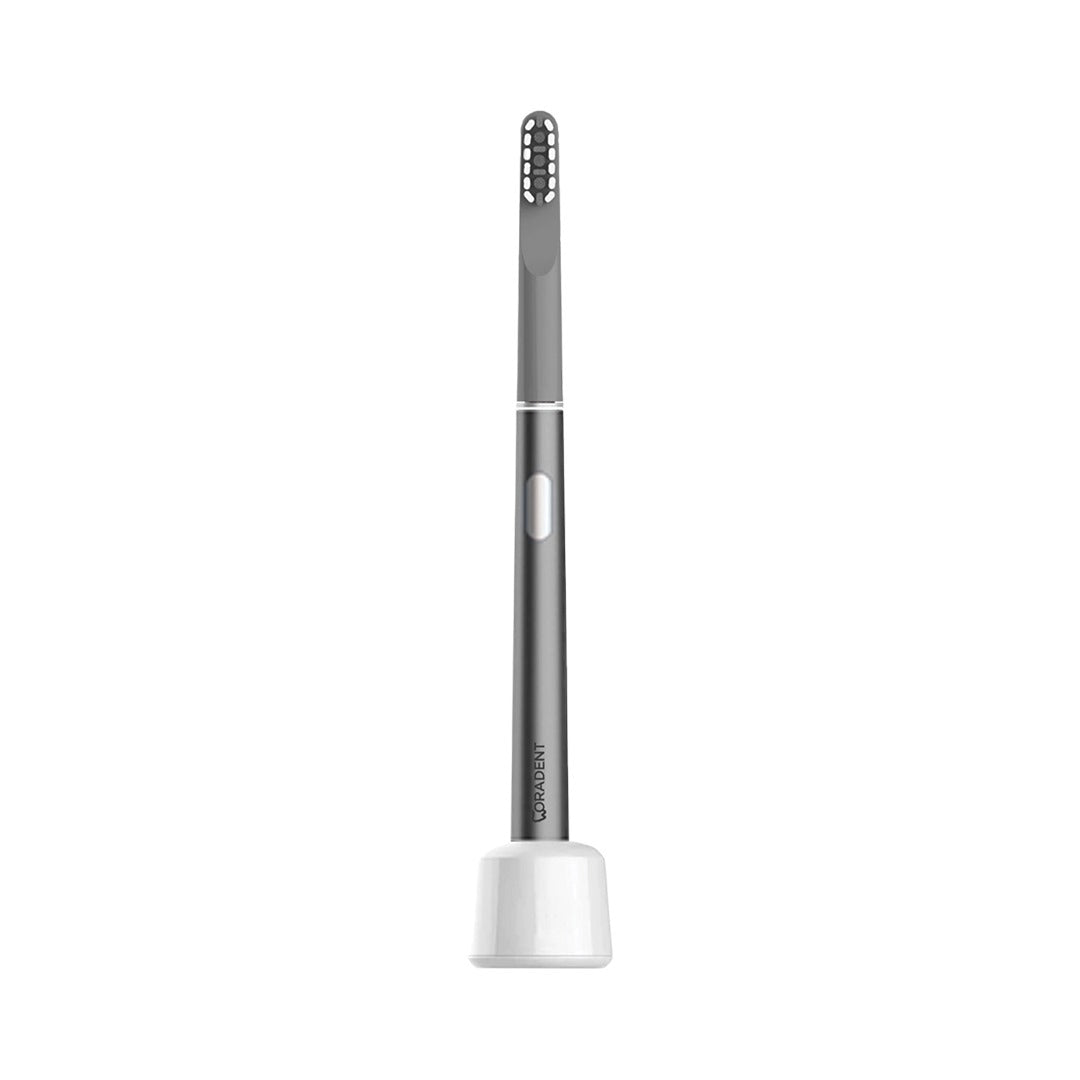
Choosing and using an electric toothbrush for sensitive gums is mostly about being gentle and consistent. The right head, the right mode and a light touch let you clean thoroughly without making sore gums worse.
Whether you are switching from a manual brush or trying a sonic brush for the first time, these tips will help you brush comfortably from day one.
Why an electric toothbrush can suit sensitive gums
With a manual brush, all the cleaning comes from your hand, and many people press too hard to feel they are doing a good job. That pressure can be rough on tender gums.
A sonic toothbrush works differently. The head moves at high speed, so you only need to guide it slowly along your teeth. There is no need to scrub, and a light touch is all it takes. Used gently, that makes an electric toothbrush a comfortable choice for many people with sensitive gums.
Set up your brush for comfort
- Choose a soft head. Soft bristles glide along the gumline rather than scratching it. PulseONE includes a Gentle Touch head for sensitive teeth alongside the everyday Precision Clean head.
- Start on a gentle mode. Begin with Sensitive mode while you get used to the feeling. Once brushing is comfortable, you can try Deep Clean.
- Replace heads regularly. Swap your head about every three months, or sooner if the bristles splay. Worn bristles can feel rough and clean less well. You can order PulseONE Heads or set up a Head Plan.
- Switch on in your mouth. Place the brush against your teeth before turning it on, to avoid splashes and a sudden buzz on tender gums.
For more on what each setting does, read our guide to electric toothbrush modes.
Brush gently: technique for sensitive gums
- Use a pea sized amount of fluoride toothpaste.
- Hold the bristles at about 45 degrees towards the gumline.
- Rest the head lightly on the teeth. If the bristles are bending flat, you are pressing too hard.
- Glide slowly from tooth to tooth. Do not scrub back and forth.
- Spend about 30 seconds on each quarter of your mouth, for two minutes in total.
- Brush twice a day, morning and night, rather than more often.
If some areas bleed easily, do not avoid them. Brush them gently with a soft head and minimal pressure. Skipping them lets plaque build up, which tends to make tenderness worse.
Support your gums beyond brushing
- Pick a toothpaste for sensitivity. A fluoride toothpaste labelled for sensitive teeth or gums is a sensible choice. Very abrasive whitening pastes can feel harsh.
- Clean between your teeth daily. Floss or interdental brushes reach where a brush head cannot. Go slowly and gently.
- Consider an alcohol free mouthwash if you like to rinse, as some people find alcohol based rinses sting.
- Stay hydrated. A dry mouth can make gums feel more irritated.
- Freshen up with water during the day rather than adding extra brushing sessions.
When sensitivity needs a dentist
A gentle routine helps, but it does not replace professional care. See your dentist if bleeding continues after a week or two of careful brushing, if your gums look like they are pulling back from your teeth, or if soreness, swelling or sensitivity is getting worse. Regular check-ups catch problems early.
Questions
Is an electric toothbrush too harsh for sensitive gums?
Not when it is used gently. A sonic brush with a soft head and a sensitive mode needs only a light touch, which many people find more comfortable than scrubbing with a manual brush.
Should I avoid brushing areas that bleed?
No. Brush them gently with a soft head, because plaque left behind can keep gums irritated. If bleeding continues beyond a week or two, see your dentist.
Should I floss before or after brushing?
Either order is fine, as long as you clean between your teeth once a day. Some people like to floss first so the toothpaste can reach freshly cleared spaces.
When can I move off Sensitive mode?
Whenever brushing feels comfortable. Some people stay on Sensitive mode permanently, and that is fine, because the timer and technique matter more than the mode.
A gentle brush for sensitive gums
PulseONE gives sensitive mouths the right starting point: a Gentle Touch head in the box, a Sensitive mode, and SmartSense Brushing technology that buzzes every 30 seconds so you never feel the need to rush or press harder. If you also have sensitive teeth, our guide to choosing a sonic toothbrush for sensitive teeth is worth a read.
Explore the PulseONE sonic toothbrush, Designed in Australia, with a 12 month warranty and our 7 day smile guarantee.