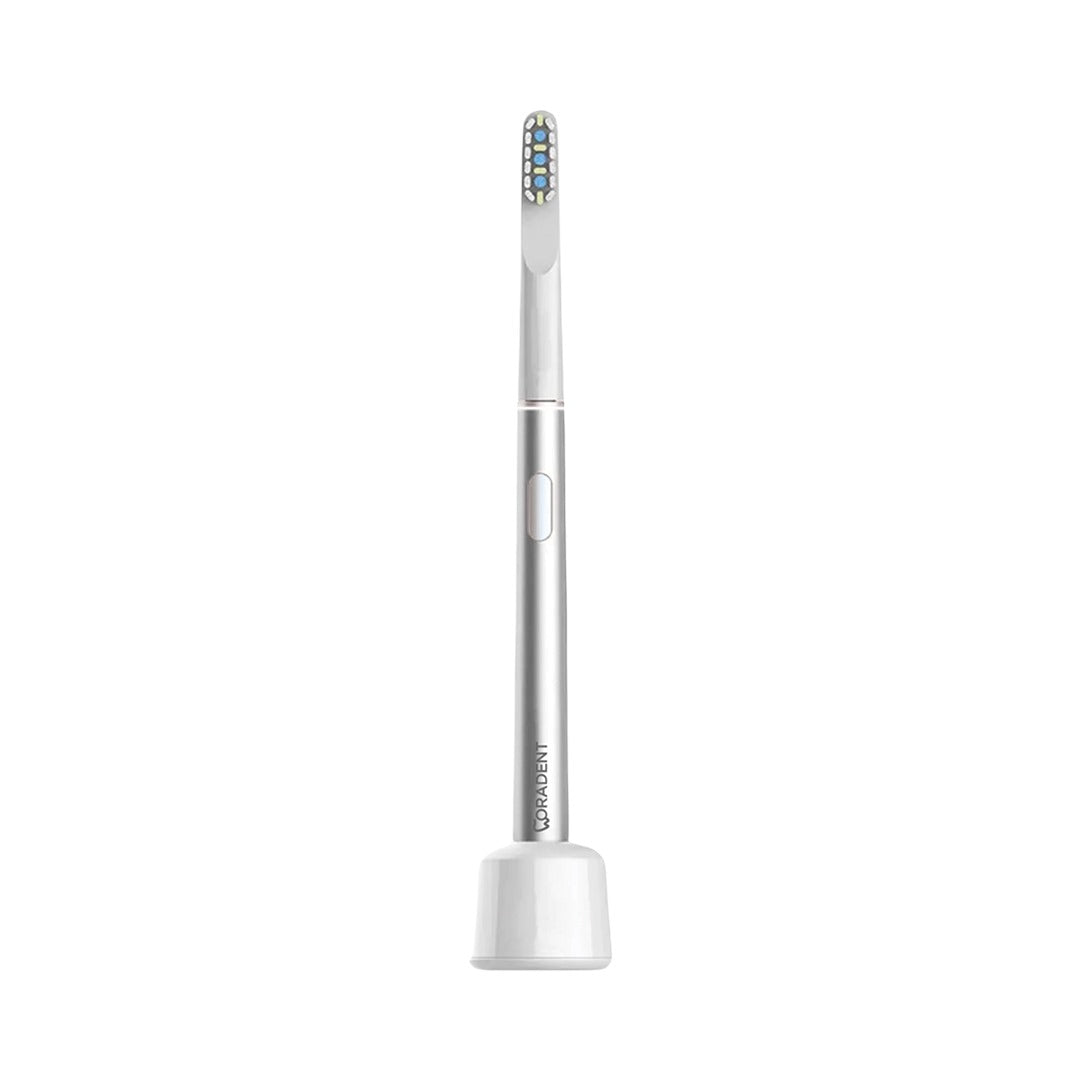
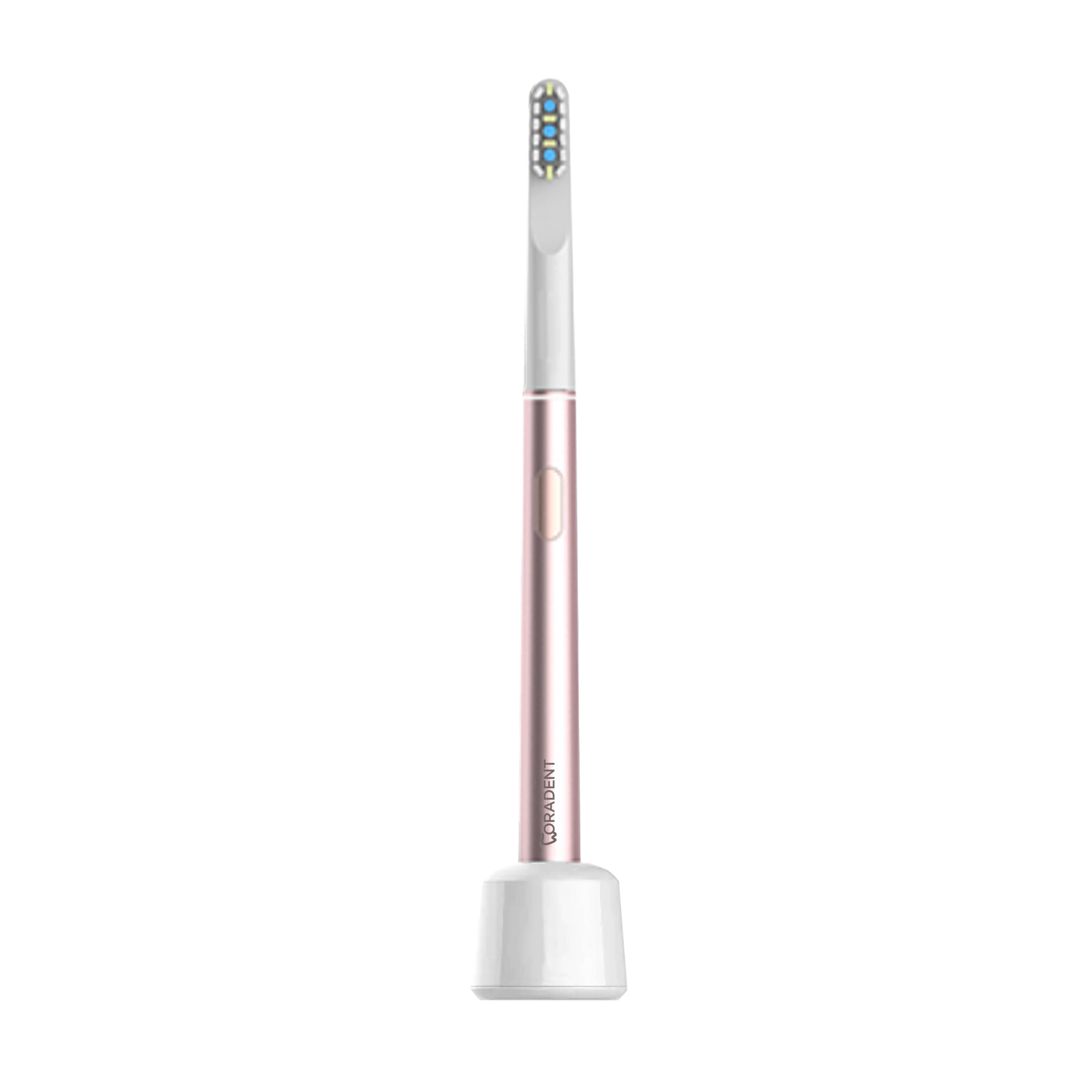
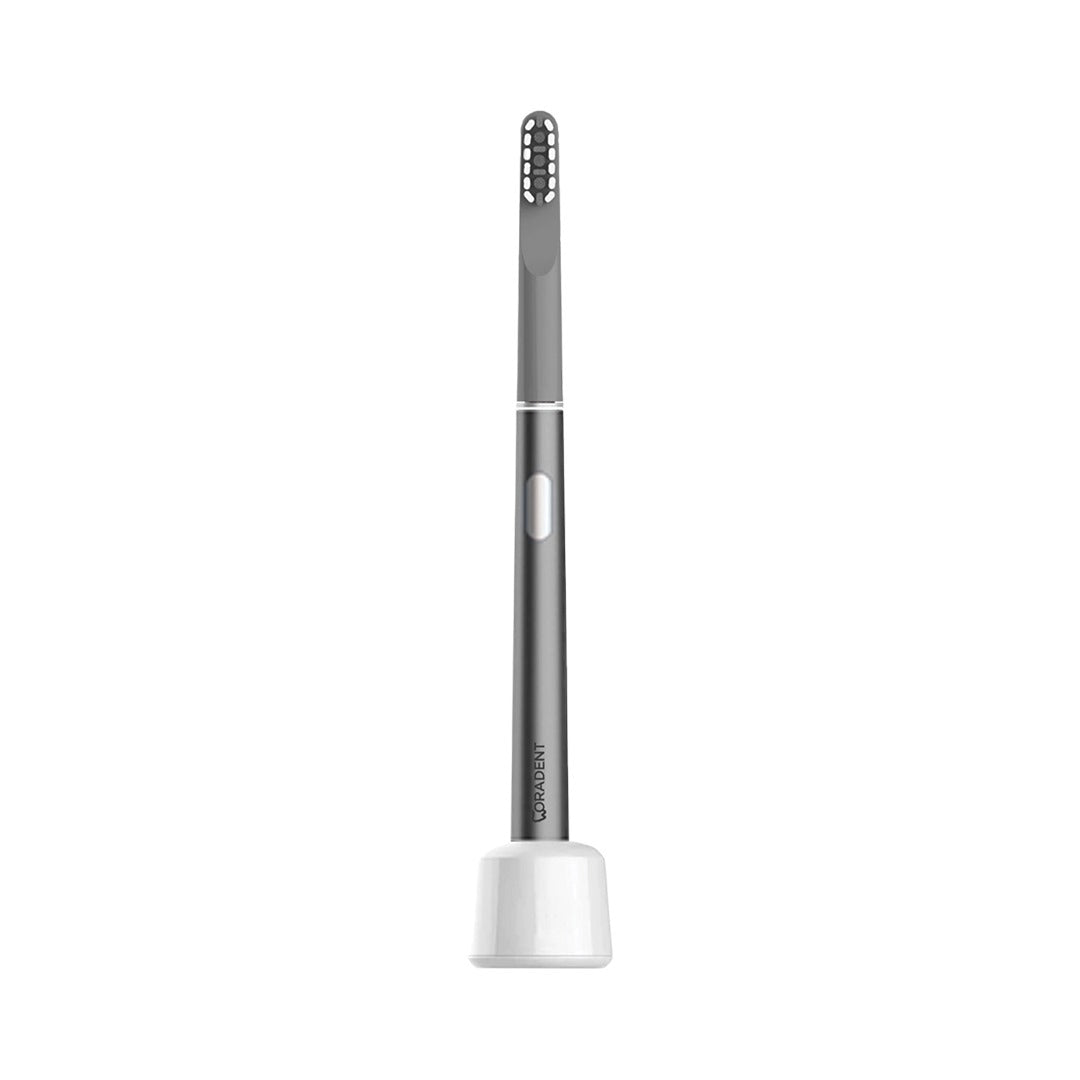
Most people believe they brush for two minutes. Without a clock, most of us stop sooner. An electric toothbrush with timer solves that quietly, and the better ones also pace you around your mouth so every area gets its share.
Here is how a toothbrush timer works, what it genuinely improves, and what to look for.
Why brushing time matters
Two minutes, twice a day, is the standard brushing advice. It gives you enough time to reach every surface without turning brushing into a chore.
The trouble is that time is hard to judge while you brush. You are thinking about the day ahead, checking the clock or getting the kids ready. Brushing slides onto autopilot, and autopilot tends to be short and uneven: lots of attention on the front teeth, very little on the insides and the back.
How a toothbrush timer works
A built-in timer usually does two jobs:
- A two minute cycle. The brush runs for two minutes, so you know when you have done the full time.
- 30 second pacing. A short buzz every 30 seconds tells you to move to the next quarter of your mouth: upper right, upper left, lower left, lower right, or whichever order you prefer.
On PulseONE this is called SmartSense Brushing technology. There is nothing to set up: you switch on, brush, and move along when you feel the buzz.
What a timer genuinely improves
More even coverage
Pacing splits your mouth into four equal parts. Instead of guessing, you give each quarter the same 30 seconds, including the areas that are easy to rush.
A steadier routine
A good clean is about doing the basics every day. A timer makes the full two minutes the default, morning and night, without you having to think about it.
Gentler habits
Some people press harder or keep going far longer, thinking more is better. Knowing the time is up helps you settle into a calm, light technique. If you are unsure about pressure, our guide on how to brush with a sonic toothbrush covers it.
Who benefits most from a timer
- Busy mornings. If you brush while thinking about everything else, the timer does the counting.
- Anyone new to electric brushing. Pacing teaches you a simple pattern from day one.
- Teenagers and young adults building their own routine, who may rush when left to guess.
- People with sensitive gums, who benefit from an even, unhurried clean rather than extra scrubbing in one spot.
What to look for in a toothbrush timer
Most electric toothbrushes now have some kind of timer, but they are not all equally useful. Look for:
- Pacing every 30 seconds, not just a single signal at two minutes.
- A buzz you can feel without it being startling.
- A timer built into the brush, so it works without your phone.
- Modes that keep the same two minute pacing, so you can switch to a gentler feel without losing your rhythm.
For the wider checklist, see our guide to electric toothbrush features to look for.
How to brush with a paced timer
- Add a pea sized amount of fluoride toothpaste.
- Place the head on your upper back teeth on one side, then switch on.
- Angle the bristles at about 45 degrees towards the gum line and glide slowly from tooth to tooth.
- At each buzz, move to the next quarter of your mouth.
- When the two minutes end, spit, rinse the head and stand the brush upright to dry.
Questions
How long should you brush with an electric toothbrush?
Two minutes, twice a day, the same as with a manual brush. Our article on how long you should brush your teeth explains why two minutes is the standard.
Does every electric toothbrush have a timer?
Many do, but not all include 30 second pacing. Check the product details for both a two minute cycle and a quarter by quarter signal.
What does the buzz every 30 seconds mean?
It is your cue to move to the next quarter of your mouth. Four quarters of 30 seconds adds up to the full two minutes.
Can I brush for longer than two minutes?
You can, but longer is not automatically better, especially if you press hard. Focus on a light touch and even coverage over the full two minutes.
A timer that works quietly: PulseONE
PulseONE has SmartSense Brushing technology built in, with a two minute timer and a short buzz every 30 seconds, alongside SonicSweep technology and three modes. It gives 45 days on one charge, approximately six weeks, from any USB-C cable, and is Designed in Australia. Compare it with our previous model on the comparison page.