The manual toothbrush vs electric toothbrush question comes down to one thing: which brush helps you clean well, every morning and night, without relying on perfect technique. Both can do the job. The difference is how much of the work depends on you.
Below we compare the two honestly, covering technique, timing, gum comfort, hygiene and cost, so you can decide what suits your routine.
Where a manual toothbrush falls short
A manual brush is simple, cheap and available everywhere. Used carefully for two full minutes with a soft brush and fluoride toothpaste, it cleans well. The trouble is that most of us do not brush that way every time.
- Scrubbing too hard. When a manual brush feels like it is not doing enough, the instinct is to press harder. Heavy scrubbing, especially with firm bristles, can wear enamel and irritate the gumline over time.
- Uneven coverage. Without a guide, it is easy to spend most of the time on the front teeth and rush the back molars and inner surfaces.
- Cutting the time short. Two minutes feels longer than it is. Many people stop well before the recommended time without realising.
- Worn bristles. Manual brushes often stay in the cup long after the bristles have splayed and stopped cleaning properly.
None of these are faults of the brush itself. They are habits, and habits are hard to change on willpower alone.
What an electric toothbrush changes
An electric toothbrush moves the bristles for you, so your job shifts from scrubbing to guiding. That one change addresses several of the habits above.
- Consistent motion. The head moves at the same speed every time, whether you are wide awake or half asleep.
- Less pressure needed. Because the brush does the movement, you can hold it lightly against each tooth and glide along the gumline.
- Built-in timing. Most electric toothbrushes include a two minute timer, and many pace you through each quarter of your mouth.
- Modes for comfort. Gentler modes help if your teeth or gums are sensitive.
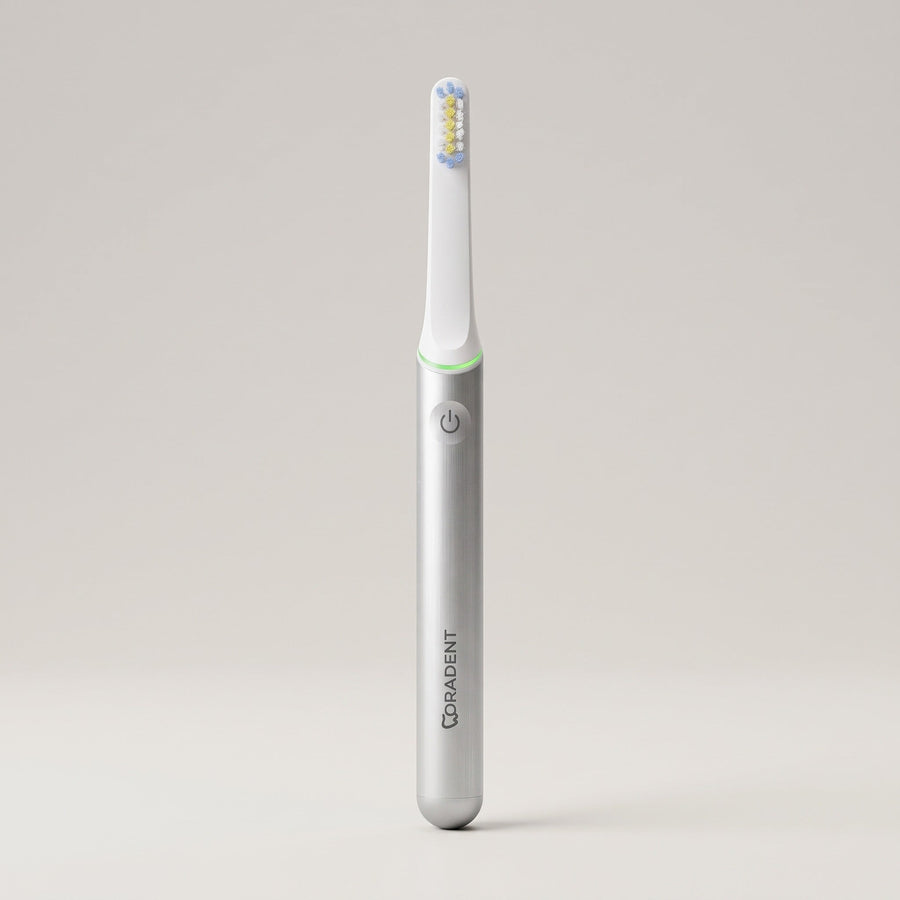
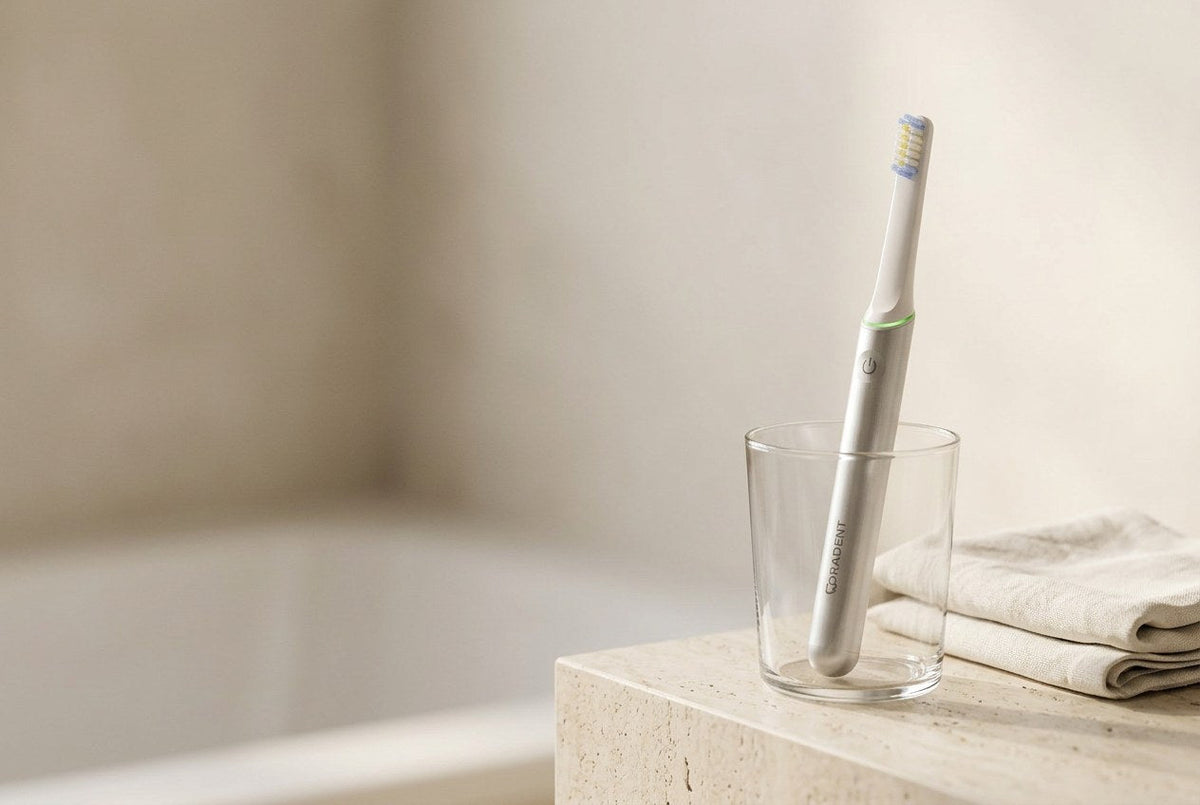
Electric brushes come in two broad types. Rotating brushes spin a small round head back and forth. Sonic brushes, like PulseONE, sweep the bristles side to side at high speed. PulseONE's SonicSweep technology makes 38,000 movements a minute, with the head sweeping 45 degrees side to side. If you want the detail, our guide to sonic and rotating electric brushes explains how the two compare.
Hygiene: does one stay cleaner?
Any toothbrush that sits wet in a bathroom collects bacteria, manual or electric. What matters is how you look after it.
- Rinse the bristles well after brushing and shake off excess water.
- Store the brush upright so it can air dry, and avoid closed containers while it is still wet.
- Do not share brushes or heads.
- Replace the brush or head about every three months, or sooner if the bristles look worn or you have been unwell.
With an electric brush you replace only the head, not the whole brush. That makes it easier to keep bristles fresh without throwing out a full plastic brush each time.
Cost compared
A manual brush costs a few dollars and needs replacing about four times a year. An electric toothbrush costs more upfront, then needs replacement heads at a similar rhythm.
As an example, PulseONE is A$228 and comes with two heads. After that, a PulseONE Heads 2-pack is A$29, so replacing a head every three months costs about A$58 a year. You can see how it stacks up against other options on our compare page.
Whether that is worth it depends on how you brush now. If you already brush gently for two full minutes and replace your brush on time, a manual brush serves you well. If you rush, press hard or lose track of time, an electric brush takes care of much of that for you.
Which one suits you
An electric toothbrush is likely to be the better fit if you:
- tend to scrub, or have been told you brush too hard
- often stop before two minutes are up
- find the back teeth and gumline hard to reach
- have reduced grip or find manual brushing tiring
A manual brush may be enough if you are disciplined with technique and timing, or if you need a cheap backup for travel. Whichever you choose, the fundamentals stay the same: brush twice a day with fluoride toothpaste, clean between your teeth and see your dentist regularly.
Questions
Is an electric toothbrush gentler on gums than a manual one?
It can be, mostly because you no longer need to scrub. Holding an electric brush lightly and letting it do the movement puts less force on the gumline than vigorous manual brushing. If your gums bleed or feel sore, speak with your dentist.
Do I still need to floss with an electric toothbrush?
Yes. No toothbrush cleans fully between teeth where they touch. Floss or interdental brushes reach those gaps, whatever kind of toothbrush you use.
How often should I replace an electric toothbrush head?
About every three months, the same as a manual brush, or sooner if the bristles splay. Our guide to replacing your toothbrush head lists the signs to look for.
What about bamboo toothbrushes and water flossers?
A bamboo brush is a manual brush with a different body material, so the same technique points apply. A water flosser cleans between teeth and along the gumline, and works alongside a toothbrush rather than replacing one.
Try PulseONE
If you are ready to move on from manual brushing, PulseONE keeps it simple: SonicSweep cleaning, a two minute SmartSense timer that buzzes every 30 seconds, three modes and 45 days on one charge, approximately six weeks, from any USB-C cable. It is Designed in Australia and backed by our 7 day smile guarantee.