The link between a sonic toothbrush and gum health comes down to plaque at the gumline. Plaque that sits along the edge of the gums can irritate them, and a sonic brush helps you remove it with less effort and less pressure. It is a helpful tool, not a treatment, and it works best alongside good technique and regular dental visits.
Here is how it works, what it can and cannot do, and how to brush for comfortable, healthy gums.
Why plaque at the gumline matters
Plaque is a soft, sticky film of bacteria that builds up on teeth every day. It collects most along the gumline and between teeth, where it is easy to miss.
When plaque stays on the gumline, the gums can become irritated. Common signs include:
- gums that bleed when you brush or floss
- redness or puffiness along the gum edge
- tenderness when brushing
- persistent bad breath
If plaque is left long enough, it can harden into tartar, which brushing cannot remove. Only a dental professional can clean it away. That is why daily plaque removal at the gumline is the focus of good gum care. For more on what causes irritated gums, read our guide to gum inflammation causes.
How sonic brushing works at the gumline
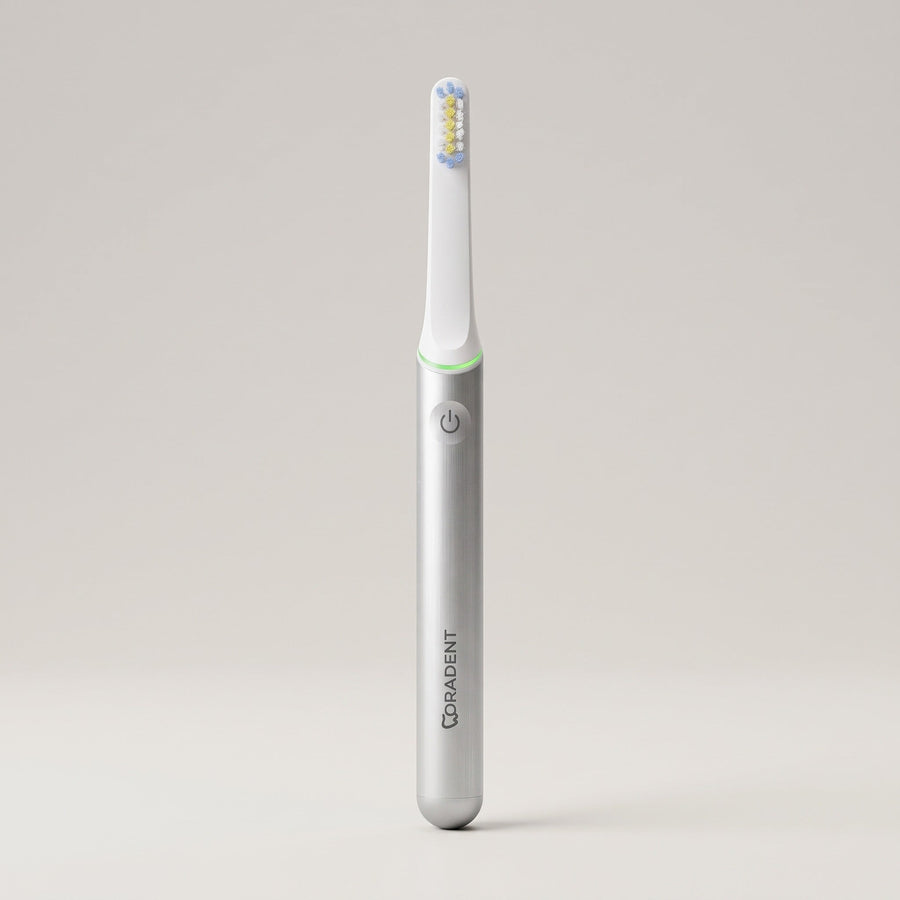
A sonic toothbrush moves its bristles side to side very quickly. PulseONE's SonicSweep technology makes 38,000 movements a minute, with the head sweeping 45 degrees side to side.
That fast, even movement does three useful things for gum care:
- It disturbs plaque where the bristles meet the gumline, so you do not need to scrub to break it up.
- It stirs toothpaste and saliva around the bristle tips, helping spread the clean across the tooth surface.
- It reduces the need for pressure. Because the brush supplies the motion, you can hold it lightly, which is kinder to gums than hard manual scrubbing.
The speed also stays the same every time, so the quality of your clean depends less on how tired or rushed you are.
What a sonic toothbrush can and cannot do
It can:
- help remove plaque along the gumline with a gentle touch
- make it easier to brush for the full two minutes, especially with a pacing timer
- offer gentler modes and heads for sensitive gums
It cannot:
- clean fully between teeth where they touch, so floss or interdental brushes are still needed
- remove tartar, which needs a professional clean
- treat gum disease or reverse gum recession, which need a dentist
Technique for healthy gums
- Angle the bristles at about 45 degrees towards the gumline, on the outside and inside surfaces.
- Use a light touch. Let the brush do the work. If your gums feel sore, you are probably pressing too hard.
- Glide slowly from tooth to tooth, pausing briefly on each one.
- Brush for two minutes, giving each quarter of your mouth about 30 seconds. PulseONE's SmartSense Brushing technology buzzes every 30 seconds to tell you when to move on.
- Clean between your teeth daily with floss or interdental brushes.
- Replace your head about every three months. Splayed bristles do not reach the gumline well. PulseONE replacement heads come in a 2-pack for A$29.
If your gums are tender, start with a gentle mode and soft head. On PulseONE, that is Sensitive mode with the Gentle Touch head. Our article on choosing an electric toothbrush for gum health covers what to look for.
When to see your dentist
A better brush helps, but it is not a substitute for professional care. Book in with your dentist if you notice:
- bleeding that continues beyond a couple of weeks of gentle, consistent brushing
- swollen, red or painful gums
- gums pulling back from your teeth
- persistent bad breath or a bad taste
- teeth that feel loose
Questions
Is a sonic toothbrush safe for sensitive gums?
For most people, yes. Because you do not need to scrub, a sonic brush used with a light touch is gentle on gums. Start on a gentle mode and speak with your dentist if discomfort continues.
Can a sonic toothbrush fix bleeding gums?
A toothbrush cannot treat gum disease. Gentle, consistent plaque removal along the gumline supports healthy gums, but bleeding that persists needs a dental check up.
Do I still need to floss with a sonic toothbrush?
Yes. Sonic brushing cleans tooth surfaces and the gumline well, but floss or interdental brushes are needed for the tight spaces between teeth.
Gentle on gums with PulseONE
PulseONE pairs SonicSweep technology with SmartSense pacing, three modes and a Gentle Touch head in the box. It is A$228, Designed in Australia and backed by our 7 day smile guarantee.