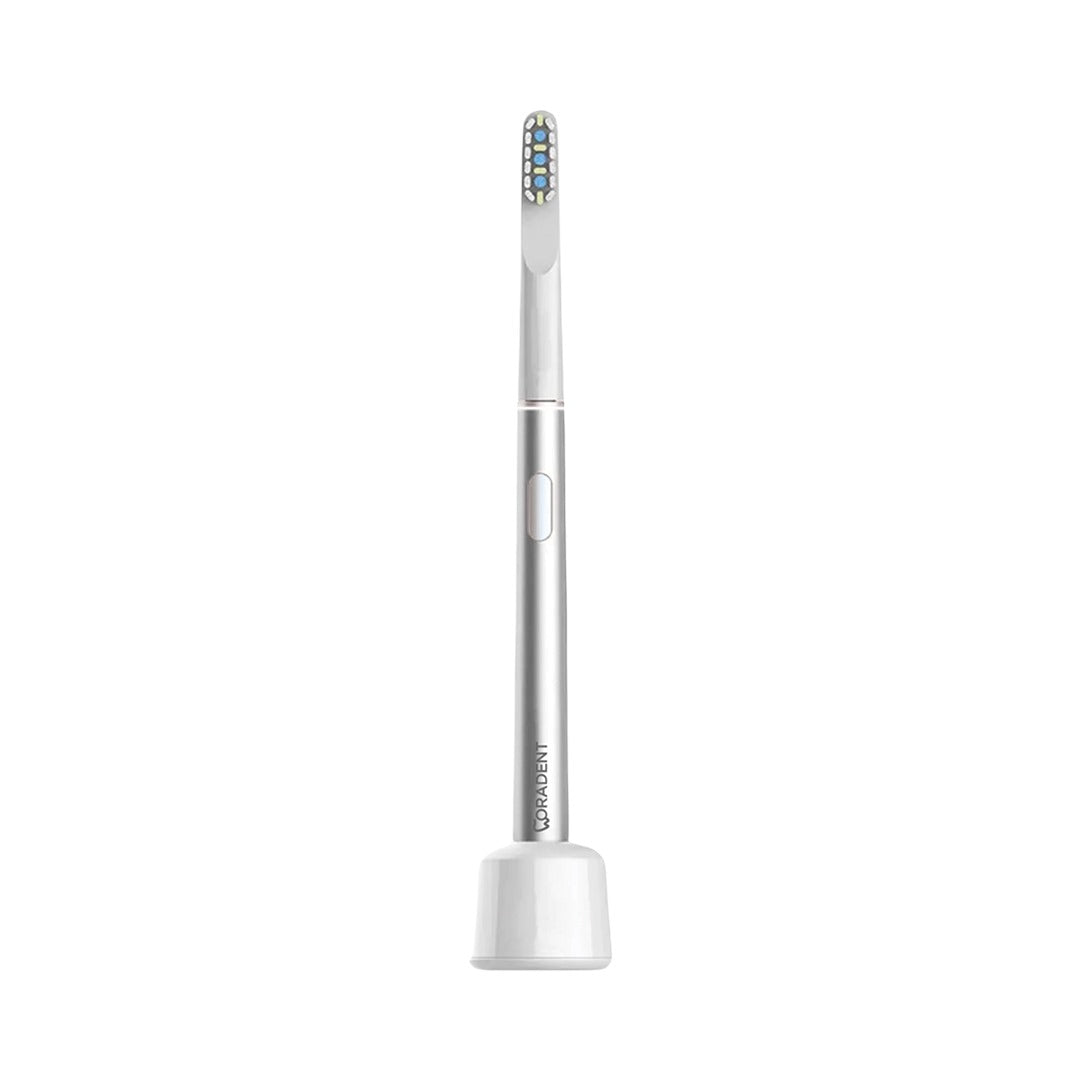
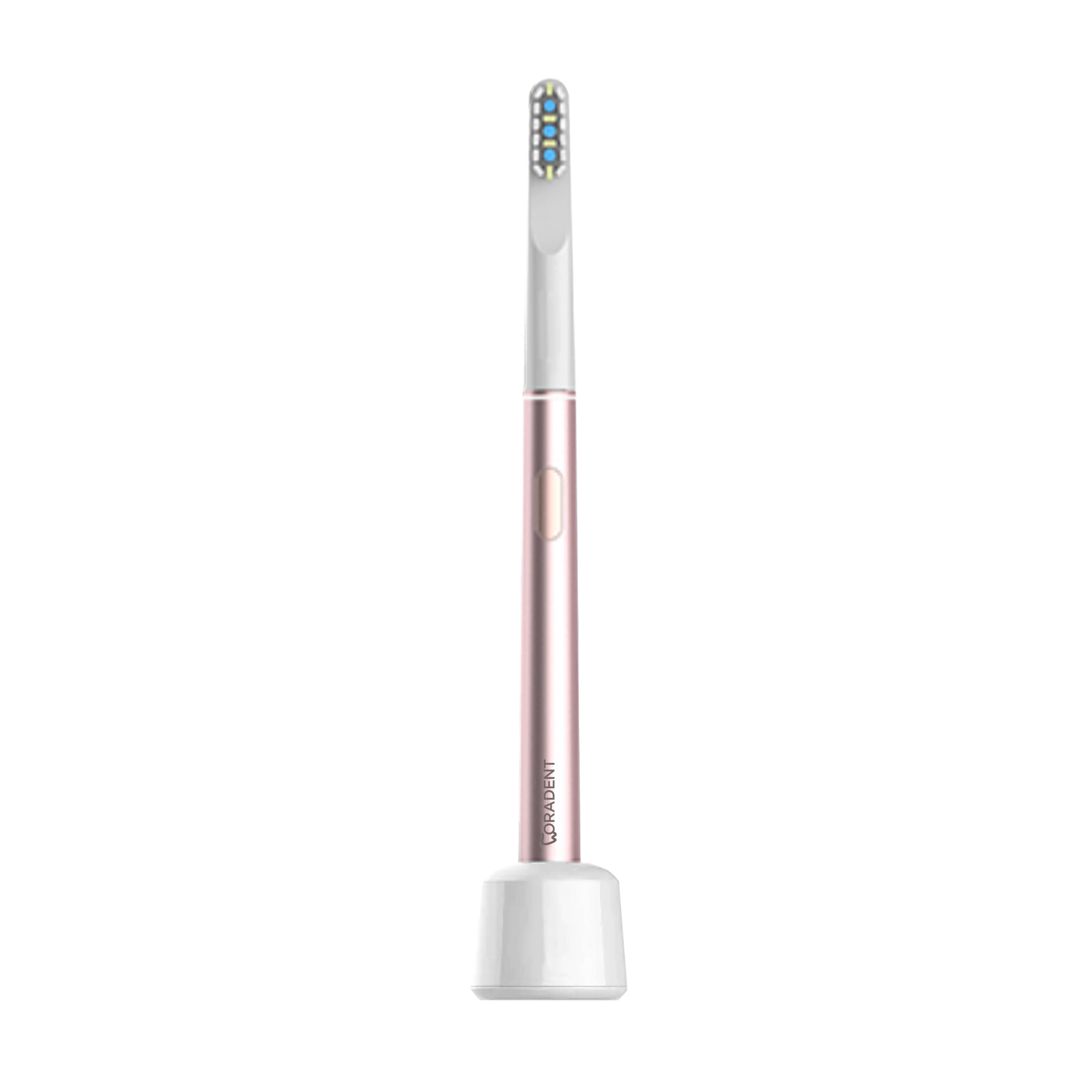
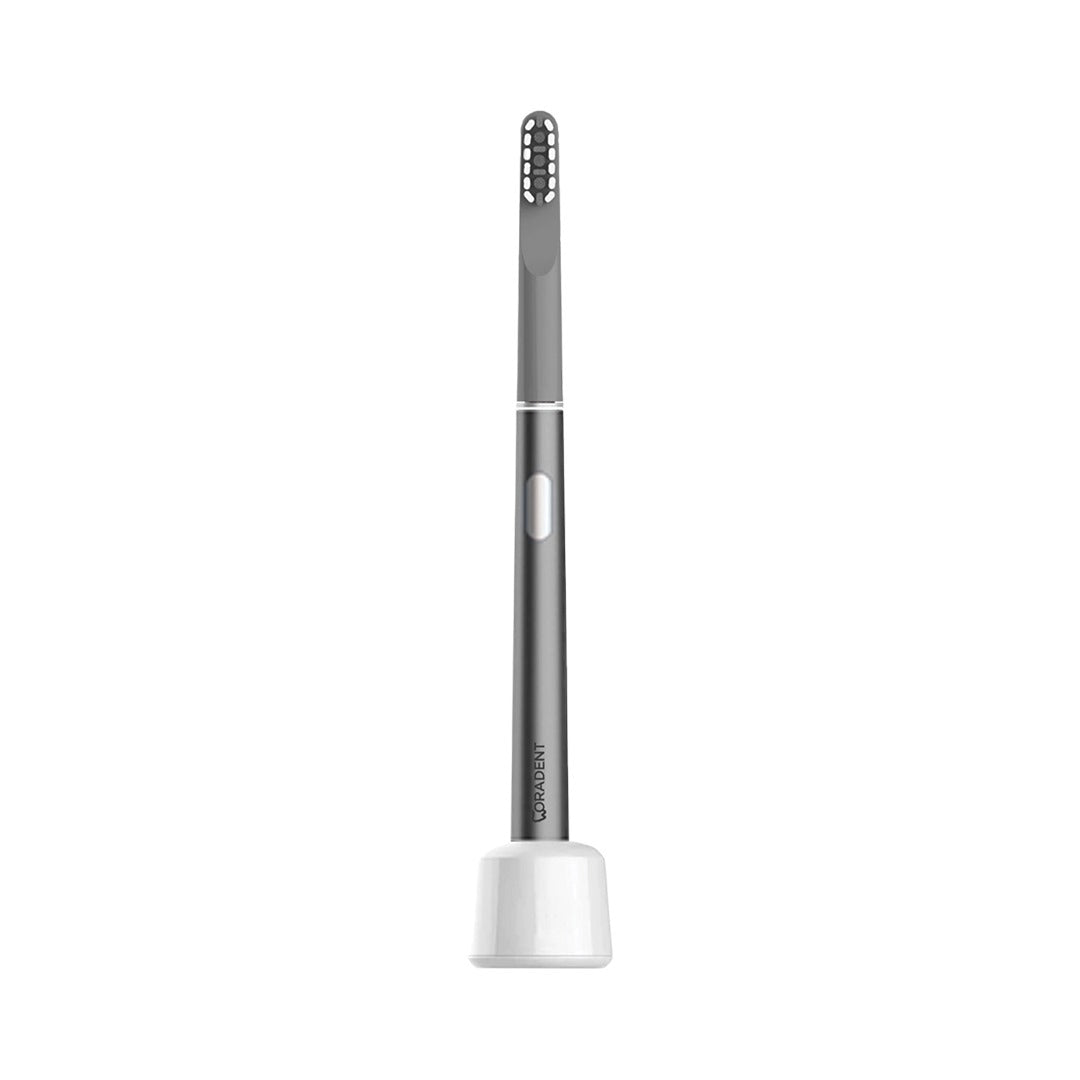
A sonic toothbrush looks much like any other electric toothbrush, but its head moves in a very different way. So how does a sonic toothbrush work? The short answer is speed: the head makes tens of thousands of small side to side movements a minute, and you simply guide it around your mouth.
Here is what that motion does, and how to get the most from it.
What makes a toothbrush sonic
A sonic toothbrush moves its head side to side very quickly, rather than relying on the slower back and forth scrubbing you do by hand. The bristles make short, fast strokes across the tooth surface and along the gum line.
The name comes from that speed. The brush vibrates at a frequency within the range you can hear, which is why sonic brushes have a distinctive hum. Other electric toothbrushes often use a small round head that rotates back and forth instead. We compare the two in our guide to sonic vs oscillating toothbrushes.
What the motion does in your mouth
Because the head is doing thousands of strokes for you, your job changes. Instead of scrubbing, you hold the brush lightly against each tooth and move it slowly along.
- The bristles do the cleaning. Fast, short strokes help remove plaque from the tooth surface and the gum line.
- Toothpaste spreads well. The movement whips toothpaste and saliva into a light foam that moves around your teeth, which is why sonic brushes feel so foamy.
- Less pressure is needed. Pressing hard does not help and can make the brush feel harsh, so a light touch is gentler on gums.
How PulseONE applies sonic technology
PulseONE uses SonicSweep technology: 38,000 movements a minute, with the head sweeping 45 degrees side to side. SmartSense Brushing technology adds a two minute timer with a short buzz every 30 seconds, so you know when to move to the next quarter of your mouth.
If you own our earlier brush, Pro-Pulse, it is also a sonic toothbrush. PulseONE is the current model, and we explain what changed in Pro-Pulse vs PulseONE.
How to use a sonic toothbrush
- Charge it first. Give the brush a full charge before your first use.
- Add a pea sized amount of fluoride toothpaste. Wet the bristles lightly.
- Place, then switch on. Put the head against your teeth before switching on, so toothpaste stays in your mouth.
- Angle towards the gum line. Hold the bristles at about 45 degrees to where tooth meets gum.
- Glide, do not scrub. Rest on each tooth for a moment, then move slowly to the next.
- Follow the buzz. Move to the next quarter of your mouth every 30 seconds until the two minutes are up.
- Spit, rinse the head, store upright. Rinse the head under the tap and let it air dry.
For more detail, read our step by step guide on how to brush with a sonic toothbrush.
Choosing a cleaning mode
PulseONE has three modes, and the light ring shows which one you are in:
- Sensitive is the softest feel. Start here for your first week, or use it every day if your teeth or gums are tender.
- Deep Clean is the everyday mode for a thorough clean.
- Polishing gives a smooth finish on the tooth surface.
A slight tickle is normal for the first few days. Most people find it settles quickly once they get used to the hum.
Looking after the brush and heads
Rinse the head after each use and let it dry upright. Wipe the body now and then with a damp cloth. Replace the head about every three months, or sooner if the bristles splay. PulseONE comes with two heads, Precision Clean for everyday cleaning and Gentle Touch for sensitive teeth, and you can reorder PulseONE heads in a 2-pack for A$29 or through the Head Plan.
Questions
Is a sonic toothbrush gentle on gums?
Used with a light touch and a soft head, a sonic toothbrush is gentle on gums. Start in a gentle mode and let the brush do the strokes rather than pressing harder.
Why does a sonic toothbrush tickle at first?
The fast movement is a new sensation, especially if you are switching from a manual brush. The tickle usually fades within a few days of regular use.
Can I use my usual toothpaste?
Yes. Any fluoride toothpaste works well with a sonic toothbrush. You only need a pea sized amount because the motion spreads it easily.
How often should I replace a sonic toothbrush head?
About every three months, or sooner if the bristles look worn or splayed. A worn head does not clean as well, however good the brush is.
Try sonic brushing with PulseONE
PulseONE brings SonicSweep technology, SmartSense pacing and three modes together in a 71 g brushed aluminium body, Designed in Australia. It comes with our 7 day smile guarantee: use it every day for 7 days, and if you are not happy, we give you a full refund and pay for the return.