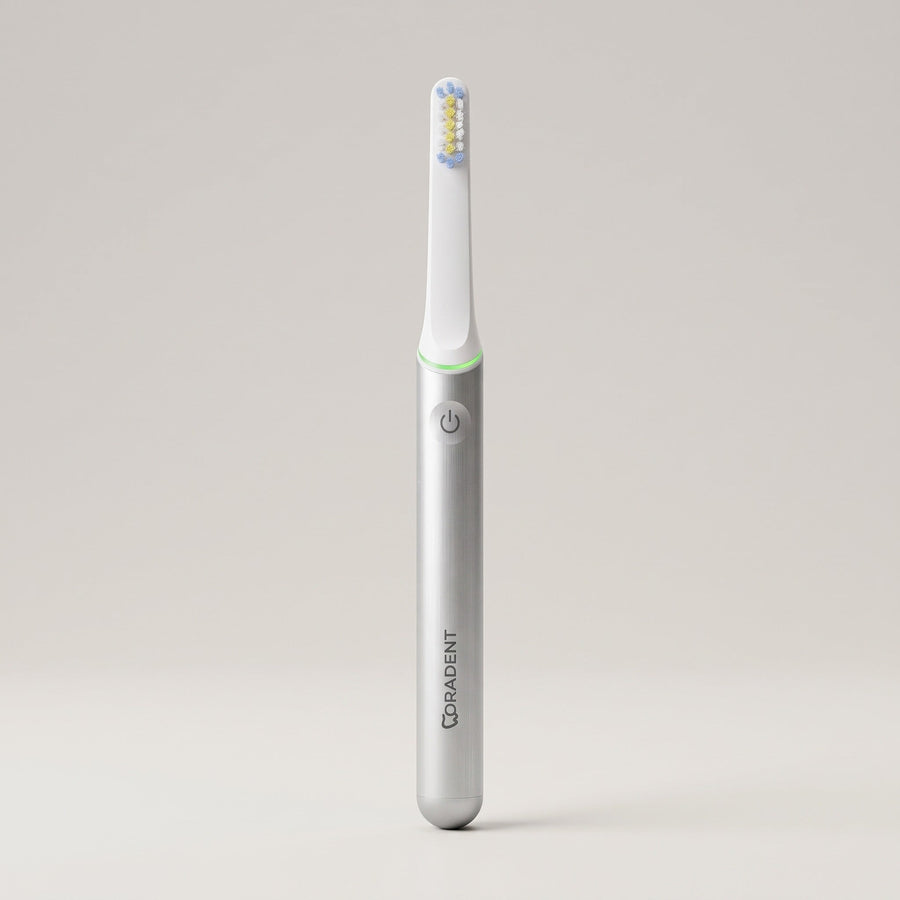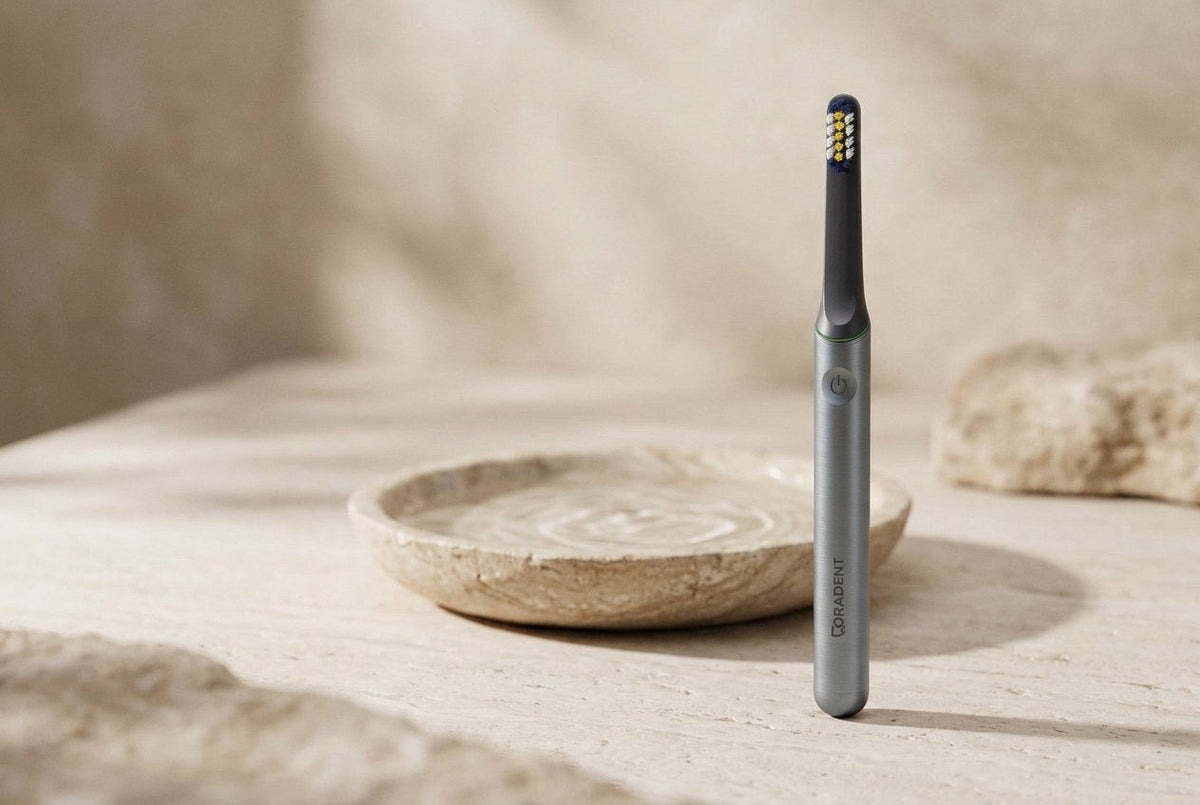
What is a sonic toothbrush? It is a type of electric toothbrush with a slim head that moves side to side at very high speed, rather than turning in circles. You guide it slowly around your mouth and the brush creates the cleaning movement for you.
This guide explains how sonic brushes work, how they compare with manual and rotating brushes, and who they suit best.
How a sonic toothbrush works
Inside the body of a sonic toothbrush is a small motor that drives the brush head back and forth thousands of times a minute. The movement is short and fast, so the bristles sweep across each tooth many times while you hold the brush still or glide it along.
That speed also stirs up toothpaste and saliva around the bristles. You will feel it as a gentle, foamy buzz. The result is a brush that does the scrubbing work for you, so you can focus on placing the head in the right spot and moving it slowly.
PulseONE, for example, uses SonicSweep technology: 38,000 movements a minute, with the head sweeping 45 degrees side to side.
Sonic, rotating and manual brushes compared
- Manual toothbrush: all the movement comes from your hand, so results depend entirely on your technique, pressure and patience.
- Rotating electric toothbrush: a small round head turns back and forth, cleaning one tooth at a time.
- Sonic electric toothbrush: a slim, familiar shaped head moves side to side at high speed, and you glide it along the teeth.
Both kinds of electric brush can clean well. The difference is mostly in feel and technique. If you want a deeper comparison, read our article on sonic versus rotating toothbrushes.
What a sonic toothbrush does well
- Consistent movement. The brush moves the same way every time, so your clean is less dependent on how tired or rushed you are.
- A light touch. Because the brush does the work, there is no need to press hard, which is kinder to gums.
- Helps remove plaque along the gumline. Angling the slim head towards the gums lets the bristles work where plaque tends to build up.
- Built-in timing. Many sonic brushes include a two minute timer, and some pace you through each quarter of the mouth.
- Everyday surface stains. A polishing mode can help with surface marks from coffee and tea as part of regular brushing. It is not a whitening treatment.
Who a sonic toothbrush suits
A sonic toothbrush suits most adults who want an easier, more consistent clean. It is especially worth considering if you:
- tend to scrub hard with a manual brush;
- have sensitive teeth or gums and want a gentle mode;
- often rush and would benefit from a timer;
- prefer the shape and feel of a traditional brush head;
- travel and want a light brush with long battery life.
If you have a specific dental condition, braces or recent dental work, ask your dentist which brush and head suit you.
What to look for in a sonic toothbrush
Look for a two minute timer with 30 second prompts, a sensitive mode, a choice of soft heads, a battery that lasts weeks rather than days, and water resistance. Check how much replacement heads cost and how easy they are to buy. Our guide on how to choose an electric toothbrush takes you through each decision.
Questions
Is a sonic toothbrush the same as an electric toothbrush?
A sonic toothbrush is one kind of electric toothbrush. All sonic brushes are electric, but not all electric brushes are sonic. Some use a rotating round head instead.
Are sonic toothbrushes safe for sensitive teeth?
Used gently with a soft head, a sonic toothbrush is generally comfortable for sensitive teeth. Start on a sensitive mode and let the brush do the work. If sensitivity continues, see your dentist.
Does a sonic toothbrush feel strange at first?
Many people notice a tickling or buzzing feeling for the first few days. Placing the brush in your mouth before switching it on helps, and most people are used to it within a week.
How often should you replace a sonic toothbrush head?
About every three months, or sooner if the bristles splay. Worn bristles do not clean as well and can feel rough on your gums.
PulseONE, a sonic toothbrush designed in Australia
PulseONE brings these ideas together in a 71 g brushed aluminium body. It has SonicSweep technology, SmartSense Brushing technology with a buzz every 30 seconds, three modes and 45 days on one charge, approximately six weeks, from any USB-C cable. Two heads are included, and replacement heads are A$29 for a 2-pack.
Explore the PulseONE sonic toothbrush in Platinum, Rose or Graphite.