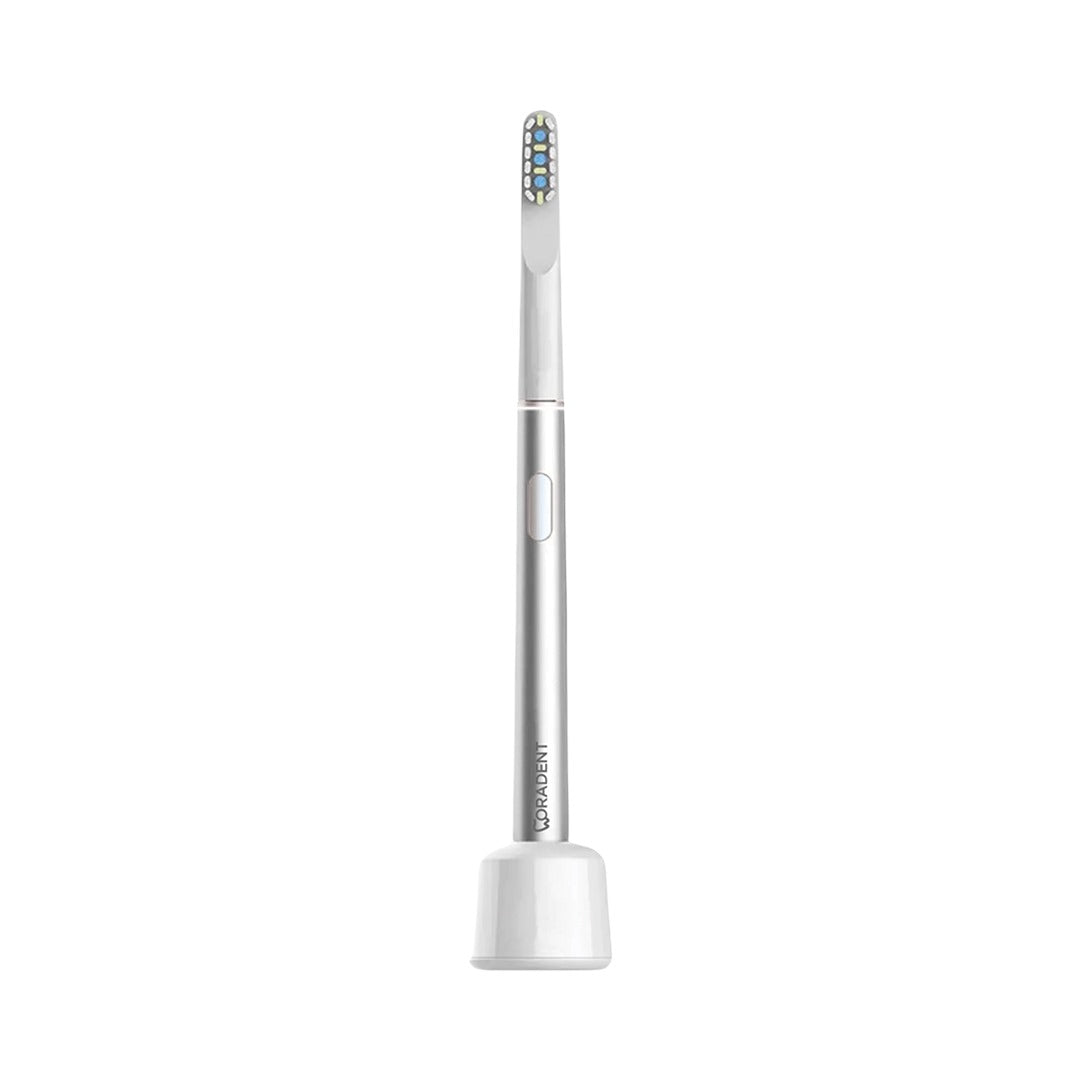
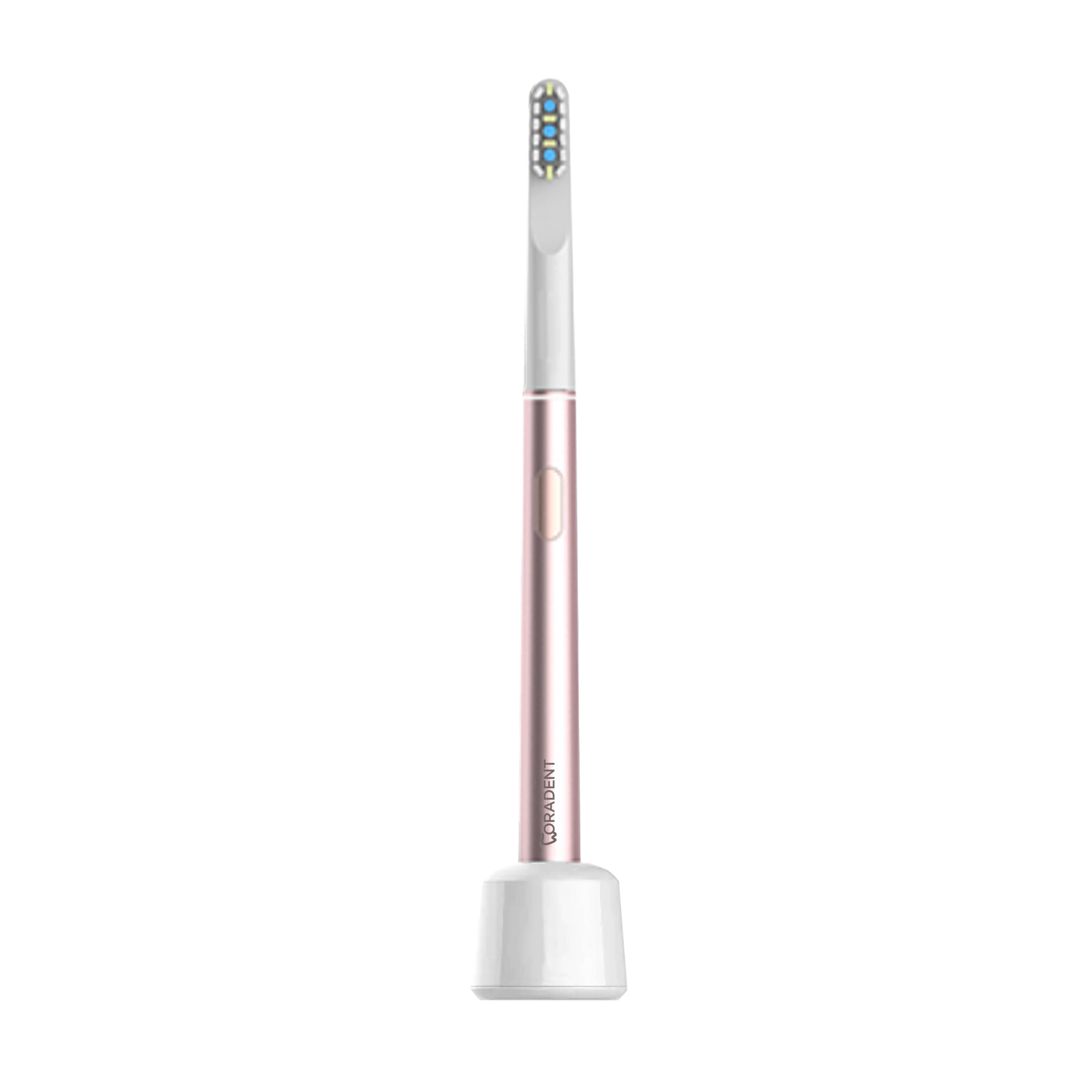
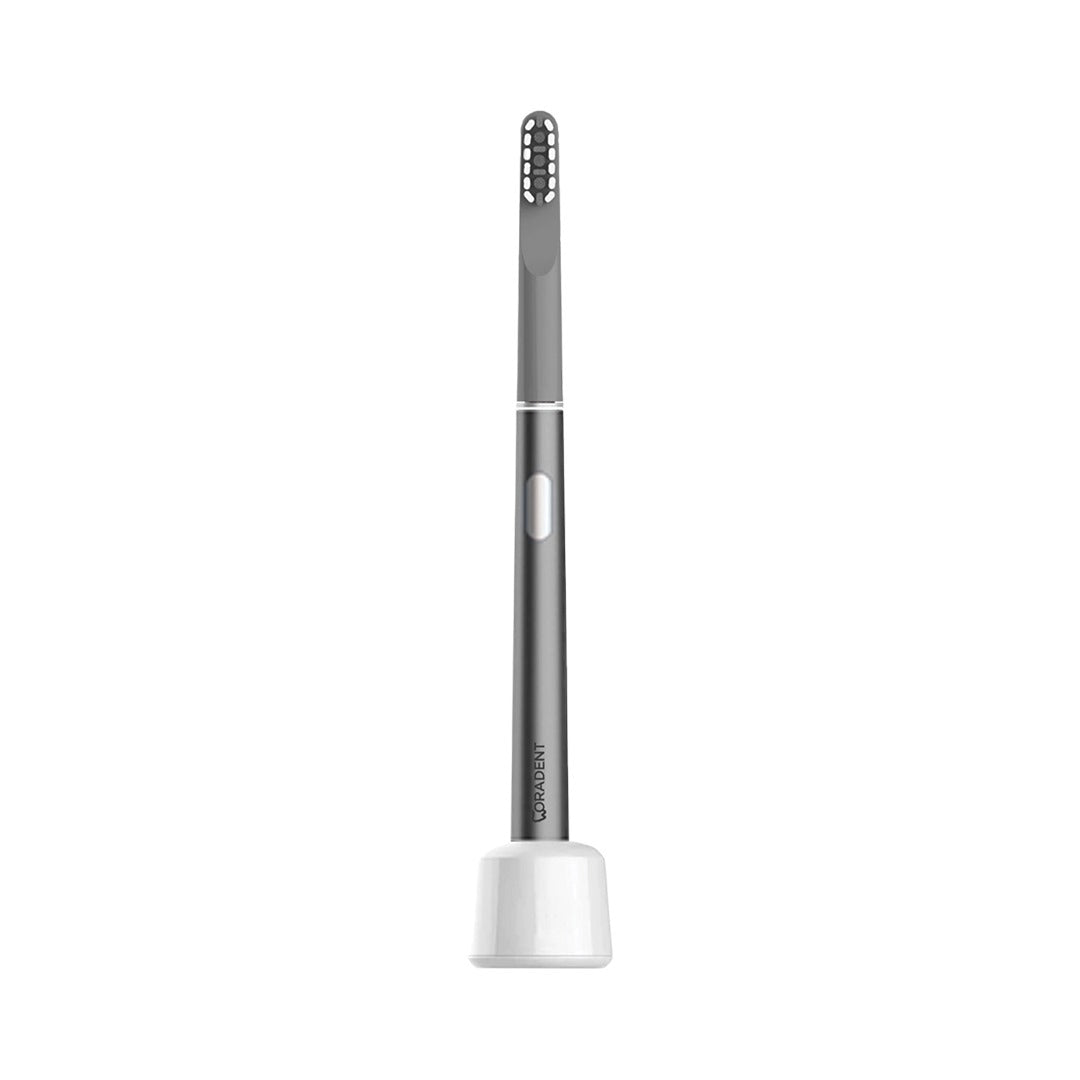
Most electric toothbrushes clean well when you use them properly, so the real differences sit in the details you live with every day. This guide covers the electric toothbrush features to look for, which ones genuinely help, and which are nice extras rather than essentials.
Use it as a checklist when you compare brushes, whatever you end up choosing.
A built-in two minute timer with pacing
Two minutes, twice a day, is the standard brushing advice, yet it is surprisingly hard to judge two minutes when you are half awake or running late. A built-in timer takes the guesswork out.
The more useful version also paces you. A short buzz every 30 seconds tells you to move to the next quarter of your mouth, so your back teeth get the same attention as your front teeth. On PulseONE this is called SmartSense Brushing technology. We explain why pacing matters in our guide to choosing an electric toothbrush with a timer.
Cleaning modes you will actually use
Modes change how the brush feels in your mouth. Three well chosen modes cover most people:
- A gentle mode for sensitive teeth or gums, or for your first week with an electric brush.
- An everyday mode for a thorough daily clean.
- A polishing mode for a smooth finish on the tooth surface.
More modes are not automatically better. If you need the manual to remember what each one does, you will probably settle on one anyway. Look for a clear way to see which mode you are in, such as a light that changes with each mode.
Battery life and charging
Battery life decides whether the brush is ready when you are. A brush that needs charging every week or two tends to go flat at the worst moment, usually the night before a trip.
Check two things: how long a charge lasts, and what you need to charge it. A dedicated charging base is one more thing to keep on the bench and one more thing to pack. A brush that charges from a standard USB-C cable can share the cable you already carry for your phone or laptop.
Comfort, weight and build quality
You hold your toothbrush for around four minutes a day, so weight and balance matter more than they seem in a shop. A light, slim body is easier to angle along the gum line and around your back teeth.
Build quality matters too. Look for a recognised water resistance rating such as IPX7 and a sealed charging port, because the brush will spend its life in a wet bathroom. A metal body such as aluminium feels solid and is easy to wipe clean.
Travel friendly design
If you travel for work or head away on weekends, look for:
- A slim travel case that protects the head.
- A button that will not switch the brush on inside a bag.
- Battery life long enough that you can leave the cable at home for a short trip.
Replacement heads and running costs
The brush is a one-off purchase; heads are the ongoing cost. Plan to replace the head about every three months, or sooner if the bristles splay. Before you buy, check:
- What a pack of replacement heads costs.
- Whether heads are easy to reorder, ideally on a schedule so you never forget.
- Whether there is a softer head for sensitive teeth.
Heads are usually made for one model, so confirm compatibility rather than assuming. Our guide to the signs it is time to replace your toothbrush head shows what a worn head looks like.
Nice extras, not essentials
Some electric toothbrushes include pressure sensors or companion apps that track your brushing. These can suit people who enjoy data, but they are not essential for a good clean. Gentle technique, a soft head, a timer you follow and a brush you enjoy picking up will do more for most people than another notification on their phone.
Questions
What is the most important electric toothbrush feature?
For most people it is a two minute timer with 30 second pacing, because it gives every part of the mouth equal time. After that, a comfortable head and a battery that suits your routine make the biggest everyday difference.
How many cleaning modes do I need?
Three is plenty for most people: one gentle, one everyday and one polishing. A gentle mode is worth having even if your teeth are not sensitive, because it makes the first few days with a new brush more comfortable.
How long should an electric toothbrush battery last?
It varies a lot between brushes, so check the stated figure and how the brush charges. A longer battery life means less time thinking about chargers, which matters most if you travel.
Is a sonic toothbrush better than other electric toothbrushes?
Sonic and oscillating brushes can both clean well with good technique. The difference is mostly in how the head moves and how it feels, which we cover in our guide to sonic vs oscillating toothbrushes.
How PulseONE covers the checklist
We designed PulseONE around these features: SonicSweep technology at 38,000 movements a minute, SmartSense pacing every 30 seconds, and three modes (Sensitive, Deep Clean, Polishing) shown by a light ring. It gives 45 days on one charge, approximately six weeks, from any USB-C cable, weighs 71 g, has a brushed aluminium body, is IPX7 water resistant and is Designed in Australia. See exactly what comes with it on our what's in the box page.